custom bolts
Custom Bolts Manufacturer — Hex, Flange & Structural Bolts
We manufacture custom bolts to your drawing — turned, milled and finished in one factory, with a material certificate and pre-shipment photos before the goods ship.
Upload your drawing (STEP, IGES, DWG, DXF, PDF) — we return DFM feedback and a quote within 24 hours.
- Tolerance
- ±0.01 mm
- MOQ
- From 50 pcs
- Sample
- 5–10 days
- Production
- 25–35 days
- Documents
- MTR + pre-shipment photos
What this part is and where it is used
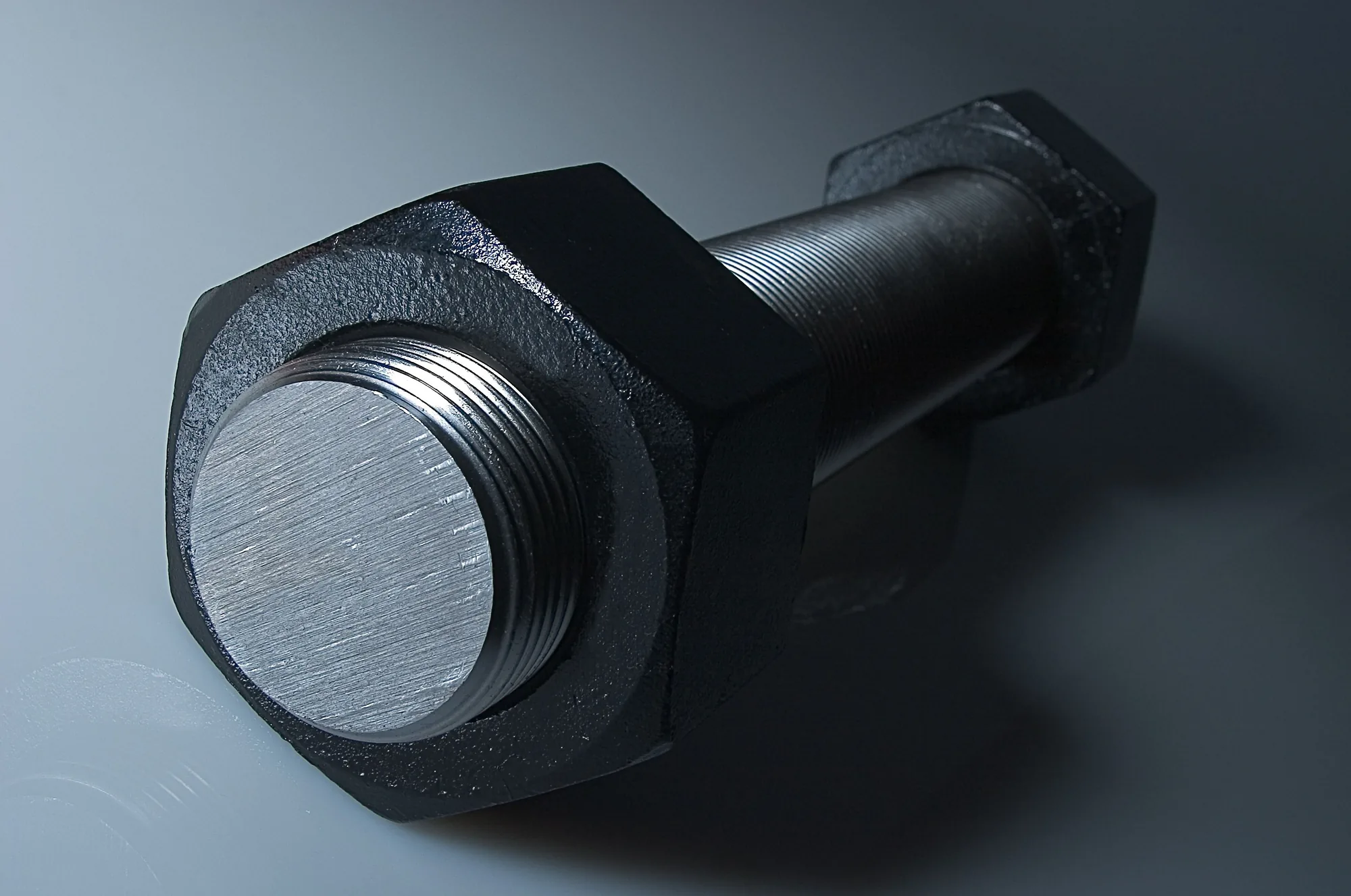
Custom bolts are externally threaded fasteners with a head, designed to pass through clearance holes and be tightened with a nut — or into a tapped body. They carry higher clamping and tensile loads than screws, so the shank, head and thread are engineered around the joint rather than picked from a catalog. Bolts and fasteners of this kind are machined to your drawing, which defines the head style, thread, grip length and material.
Buyers order custom bolts when a standard size falls short: a longer grip length, a flange head, a material such as 4140 or 316L, or a structural joint with a specific load path. A nut on a bolt and a washer complete the assembly, and we can supply those matched parts from our custom nuts and custom washers pages.
Types of custom bolts we manufacture
We cut the common head and shank forms to print:
- Hex head bolts — standard across machinery and structural frames.
- Flange bolts — the head carries an integrated bearing face that spreads load without a separate washer.
- Shoulder bolts — a precise, unthreaded shoulder acts as a pivot or locating surface.
- Structural and specialty bolts with non-standard lengths, shanks and head forms.
Each is cut to your drawing, so a specialty bolt with a custom under-head radius or a specific grip length is routine rather than a gamble. These specialty bolts and fasteners run alongside our custom screws and threaded rods and studs.
Head types and drive styles
The head and drive are produced to your drawing, not picked from a catalog bin. Volume quantities of standard heads run on heading equipment; custom heads, special across-flats, odd shank lengths and small runs are machined from bar stock. Common heads we supply:
- Hex head — wrench-driven; the default for machinery frames and structural joints.
- Flange head — a built-in bearing face that spreads clamp load and removes the need for a separate washer.
- Socket head cap — an internal hex drive with a compact head, for recessed spaces and higher tightening torque.
- Button head — a low rounded profile on the same socket drive, where head height is limited.
- Flat (countersunk) head — sits flush in a countersunk seat for clean, flush assemblies.
- Pan head — a slightly raised head with a flat bearing underside for general clamping.
- Truss head — a wide, low dome that spreads load over thin sheet metal.
- 12-point head — twelve wrenching flats for high torque in tight arcs, common in automotive and structural work.
- Square head — large wrench flats for heavy or field-tightened joints.
Drive styles span external wrench flats (hex, 12-point and square) and internal hex sockets, all set from your drawing. A specialty bolt with a custom under-head radius or a specific head marking is routine.
Thread forms and standards
Threads are cut on our own floor to the form on your drawing. Metric bolts use M-series threads, while inch bolts use UNC/UNF coarse or fine series; where a sealing thread is specified, we work BSP and NPT. We reference DIN, ISO and ANSI/ASTM geometry rather than shipping from a catalog, so your drawing always takes precedence — see our thread standards guide.
The tolerance class comes from the print: commonly 6g for external threads and 6H for internal threads. Pitch in millimeters or threads per inch is confirmed per drawing, and coarse, fine and left-hand threads are cut from the same setup, so a non-standard thread costs no extra tooling route.
Dimensions we work to
Diameter, length, grip length, head across-flats and thread run all come from your drawing; we do not cap a bolt at a catalog size. General dimensions are held to ISO 2768-m unless your print states otherwise, and precision features — a shoulder diameter, a bearing face or an under-head radius — are held to ±0.01 mm. See our tolerances page for how we read a print.
Small and large runs follow the same route: a 50-piece first batch validates the geometry and finish, then production repeats it in 25–35 days after approval. Send a STEP, DWG or PDF and we confirm the dimensions against our drawing requirements before quoting.
Materials, threads and finishes
Common materials are aluminium 2024, 5052, 6061 and 7075; stainless steel 303, 304, 316, 316L and 17-4PH; carbon and alloy steel 1045, 1215, 4140, D2 and O1; brass, copper and bronze; and titanium. Alloy steel such as 4140 covers higher-strength clamping, 17-4PH covers a bolt that has to be both strong and corrosion-resistant, and the 300-series grades cover general corrosion; the grade list sits on our materials index, with detail on the stainless steel parts, aluminium parts, steel parts, brass and copper parts and titanium parts pages.
Threads are cut to metric or inch references, or to DIN and ANSI/ASTM standards — our thread standards page lists the options. We cut coarse and fine pitches and left-hand threads, so the grip and thread run match your print. Finishing runs through our vetted partner network under one quality process: zinc plating, black oxide and passivation, among others.
Industries and applications
Metal nuts and bolts assemblies reach automotive, aerospace, oil and gas, hydraulic and pneumatic and agriculture applications. Flange and structural bolts appear in machinery frames, piping and mounting plates, while shoulder bolts serve pivots and machine fixtures. Custom nuts and bolts are usually ordered together — we cut the nuts bolts fasteners to the same thread spec so the pair mates correctly.
Why order this part from our factory
We machine custom bolts in our own factory in Qidong City, Jiangsu Province — the head, shank and thread are cut on our floor. General work is held to ISO 2768-m unless stated on the drawing, with precision features to ±0.01 mm. Orders start from 50 pieces; samples take 5–10 days and production 25–35 days. Monthly capacity runs over 100,000 parts, scheduled flexibly per order. Send a drawing and we return DFM feedback with a quote within 24 hours, then ship with a material certificate (MTR) and pre-shipment photos. WhatsApp us or use the quote form.
What a hex head bolt is used for
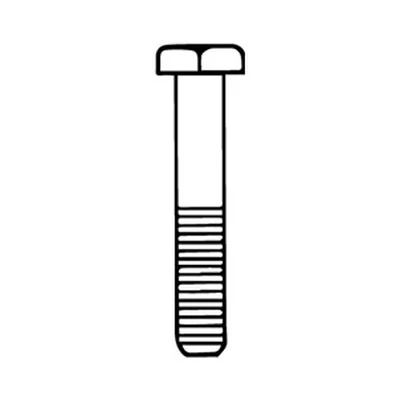
The hex head bolt is the default structural fastener: a six-sided head that takes a wrench or socket, a shank that carries shear, and a thread that provides the clamp load. It is the part people reach for when a joint has to be tightened hard, loosened for service, and tightened again — which is why it appears in machinery frames, brackets, flanges, manifolds, fixtures and structural assemblies.
Standard hex bolts are available anywhere. What is not available anywhere is a hex bolt whose head size, shank length, thread length and material are exactly what the drawing calls for. That is what we machine: headed fasteners to your file, in the quantity you actually need.
Head, washer face and thread length options
- Standard hex head — six-sided head with a machined washer face under the head, so it bears on the joint face without galling it.
- Flange head — an integrated flange spreads the load and removes the need for a separate washer in some assemblies.
- Square head — used where a wrench cannot slip, and still specified on some legacy and utility equipment.
- Head marking — your identification mark, grade mark or part number machined or stamped as the drawing shows.
- Part thread with plain shank — the unthreaded shank locates the parts and takes shear, and the thread starts where the clamp begins.
- Full thread — used where the bolt clamps through its whole length or the joint thickness varies.
- Reduced or stepped shank — for locating duties, shoulder fits or clearance inside a bore.
Tell us how the joint works and we will confirm head, shank and thread length in the DFM response rather than guessing from a catalogue.
Threads, sizes and standards
Threads are machined to your drawing: metric, inch UNC or UNF, or a sealing thread such as BSP or NPT. Standards including DIN 931/933, ISO 4014/4017 and ANSI B18.2.1 are used as geometry references for head and thread proportions — they never override your file.
Thread class and fit are confirmed before production. The thread standards page explains pitch, class and gauging in plain terms, and metric fasteners and DIN standard parts cover the common metric references.
Materials, strength and finishes
We machine hex head bolts in stainless steel 303, 304, 316, 316L and 17-4PH, carbon steel 1045 and free-cutting 1215, alloy steel 4140, aluminium 2024, 6061 and 7075, brass and titanium. 4140 is the usual pick where a joint needs strength in a compact section; 316L is chosen for corrosive service, and 17-4PH where the bolt has to be corrosion-resistant and still take a high preload. The materials page lists what else we run.
Finishes include black oxide, zinc plating, nickel plating and chrome plating, applied through our vetted partner network under one quality process. Plating adds thickness to the thread, so finish and thread fit are confirmed together on small sizes.
Why order hex head bolts from our factory
- Drawing-driven head geometry — across-flats, head height, washer face and chamfer to your file, not to a catalogue.
- Precision on the features that locate — shank and shoulder held to ±0.01 mm, ISO 2768-m elsewhere.
- Low entry quantity — from 50 pieces, with samples in 5–10 days and production in 25–35 days.
- Documents with every order — material certificate (MTR) and pre-shipment photos, see what ships with your order.
- One shop for the assembly — matching nuts, washers and studs to the same drawing set, from our own machining floor.
Send your drawing and quantity — DFM feedback and a price within 24 hours.
What shoulder bolts are and where they are used
A shoulder bolt carries a ground, unthreaded shoulder directly under the head, and that shoulder — not the thread — is the working surface. It runs in a bore as a pivot or hinge pin, sets two parts in a fixed relationship as a locating register, or acts as a stop that limits travel. Because the shoulder diameter is ground to a controlled size, the fit in the mating bore can be specified as a clearance or a light press instead of being left to whatever the thread happens to do. We manufacture shoulder bolts and shoulder screws to your drawing in our own factory in Qidong City, Jiangsu Province, China, and they ship with a material certificate (MTR) and pre-shipment photos. Typical use is linkage pivots, hinge points, clevis joints, idler and roller axles, lever arms and any joint where a plain bolt would shear or work loose.
Types and variants we manufacture
The head, the shoulder and the thread are three separate decisions on the drawing, and all three come from your print:
- Socket head shoulder bolt — an internal hex drive with a compact head, for recessed pockets and higher tightening torque.
- Hex head shoulder bolt — external wrench flats, easier to hold and re-tighten in the field.
- Flat head shoulder bolt — a countersunk head that sits flush where the joint face has to stay clean.
- Button head shoulder bolt — a low rounded head where head height is limited.
- Knurled shoulder bolts — the shoulder carries a knurl so it grips when pressed into one half of the joint and resists turning.
- Shoulder screws metric — the same part on a metric thread call-out; the wording changes, the geometry does not.
Shoulder diameter, shoulder length, thread size and thread length are independent dimensions, so a shoulder bolt can run a ground 10 mm shoulder in a bore with an M8 threaded end. These parts run alongside our custom bolts, custom screws and custom pins programmes.
Dimensions and fit
The shoulder is the tolerance-critical feature, so it is machined and held to ±0.01 mm where the drawing calls for it; general dimensions follow ISO 2768-m unless the print states otherwise. Tell us whether the shoulder runs in a clearance bore, a slip fit or a press fit and we set the diameter and surface accordingly, rather than guessing from a catalogue chart. Head across-flats or socket size, shoulder length and thread length all come from the drawing, so there is no catalogue ceiling on the size we will quote. A 50-piece first batch validates the shoulder fit and the thread, then production repeats it in 25–35 days after approval. Send a STEP, DWG or PDF and we confirm the dimensions against our drawing requirements before quoting.
Why order shoulder bolts from our factory
We machine shoulder bolts in our own factory in Qidong City, Jiangsu Province, China — head, ground shoulder and thread are produced under one route. General work is held to ISO 2768-m unless stated on the drawing, with the shoulder and other precision features to ±0.01 mm. Orders start from 50 pieces; samples take 5–10 days and production 25–35 days. Monthly capacity runs over 100,000 parts, scheduled flexibly per order. Send a drawing and we return DFM feedback with a quote within 24 hours, then ship with a material certificate (MTR) and pre-shipment photos. WhatsApp us or use the quote form.
Stud and rod types
We cut the forms that fit how the joint is assembled and loaded:
- Double-end studs — thread on both ends with a plain shank between, for flanges and covers where one end stays in the tapped hole.
- Tap-end studs — a short thread seats in the tapped hole and the other end takes a nut, common on engines, pumps and valve covers.
- Full threaded rods — threaded end to end and cut to your length, for clamps, ties and adjustable assemblies.
- Reduced shank studs — the body is a smaller diameter than the threaded ends, for weight saving or where the shank must stretch evenly under load.
Each is machined from bar to your print, with the thread run and overall length cut on our floor. Matched custom nuts and custom washers come from the same shop.
Length and cut-to-size
Overall length, thread run and end finish are cut to your drawing — we do not ask you to accept a stock length. Ends can be chamfered, rounded or pointed as the print states, and we can leave a plain shank of any run between the threaded ends. Precision features such as a shoulder or pilot diameter are held to ±0.01 mm, with general dimensions to ISO 2768-m unless stated.
Cut-to-length is routine for us: orders start from 50 pieces, samples take 5–10 days and production 25–35 days after drawing approval. See our tolerances, drawing requirements and how to order pages, or send the print through the quote form for DFM feedback within 24 hours.
Specifications
| Head types | Hex · Socket cap · Button · Flat · Pan · Truss · 12-point · Square · Flange |
|---|---|
| Thread forms | Metric (M) · UNC/UNF · BSP · NPT — per drawing |
| Standards referenced | DIN · ISO · ANSI/ASTM — geometry references, your drawing takes precedence |
| Size range | M4–M36, up to 500 mm length |
| Head forms | Hex, flange, square, T-head, eye |
| Materials | Carbon steel 1045, 4140, 316, duplex |
| Tolerance | ±0.02 mm body, 6g thread |
| Secondary | Heading, roll thread, induction harden |
| Lot size | 100–10,000 pcs |
| Head type | Hex head; flange and square head variants on request |
| Head details | Machined washer face, chamfered corners, head marking per drawing |
| Thread length | Full thread or part thread with plain shank, per drawing |
| Precision tolerance | ±0.01 mm on precision features |
| General tolerance | ISO 2768-m unless stated on the drawing |
| Finishes | As machined · black oxide · zinc plating · nickel plating · chrome plating (through our partner network) |
| Standards | DIN 931 / 933, ANSI B18.2.1 |
| Grades | 8.8, 10.9, 12.9, A2-70, A4-80 |
| Heads | Socket head cap · Hex head · Flat (countersunk) · Button · Knurled shoulder |
| Shoulder | Ground unthreaded diameter, held to drawing; plain or knurled |
| Shoulder diameter | 4–25 mm, tolerance g6/h9 |
| Shoulder length | 5–150 mm |
| Thread | M3–M20, UNF equivalents |
| Stud & rod types | Double-end · tap-end · full threaded rod · reduced shank — per drawing |
Frequently asked questions
What is the minimum order quantity for custom bolts?
We start from 50 pieces per style and material. This keeps a structural or flange bolt first run practical before you commit to production quantities.
What are your lead times?
Sample bolts take 5–10 days and production runs take 25–35 days after drawing approval. We return DFM feedback with your quote within 24 hours.
What tolerances can you hold on a custom bolt?
General work is machined to ISO 2768-m unless your drawing states otherwise, and precision features such as a shoulder diameter are held to ±0.01 mm.
Which materials do you machine bolts from?
Aluminium 2024, 5052, 6061 and 7075; stainless steel 303, 304, 316, 316L and 17-4PH; carbon and alloy steel 1045, 1215, 4140, D2 and O1; brass, copper and bronze; and titanium. Alloy steel such as 4140 covers higher clamping loads.
Can you make flange head or shoulder bolts?
Yes. We cut hex, flange and shoulder bolts to print, including custom under-head radii and specific grip lengths — these are our core work.
Do you supply the matching nuts and washers?
Yes. We machine [custom nuts](/custom-nuts/) and [custom washers](/custom-washers/) to match your bolts, so the nut on a bolt and the washer seat fit the same thread and face.
What is the difference between a bolt and a screw?
A bolt passes through clearance holes and is tightened with a nut, while a screw threads into a tapped hole or a mating body. We machine both — see our [custom screws](/custom-screws/) page.
Do you provide material certificates?
Every batch ships with a material certificate (MTR) for the raw material and pre-shipment photos of the finished parts before dispatch.
How do I get a quote for custom bolts?
Upload your drawing (STEP, IGES, DWG, DXF or PDF) through the [quote form](/request-a-quote/) or send it on WhatsApp. We reply with DFM feedback and a price within 24 hours.
Can you match my head type and drive from the drawing?
Yes. We machine hex, flange, socket cap, button, flat, pan, truss, 12-point and square heads, with external wrench flats or an internal hex drive, straight from your drawing. A non-standard under-head radius or head marking is part of the same job rather than a special route.
How do you decide the thread form and tolerance class?
From your drawing. Metric bolts use M-series threads and inch bolts use UNC or UNF, with BSP and NPT where a sealing thread is needed. The tolerance class — commonly 6g external and 6H internal — and the pitch or threads per inch are confirmed against the print, not assumed. See our [thread standards](/thread-standards/) guide.
What size custom bolts can you machine?
Diameter, length, grip length and head size are all reviewed against your drawing rather than capped at catalog sizes. General dimensions follow ISO 2768-m and precision features hold ±0.01 mm; send a STEP or PDF and we confirm what fits before quoting.
Are you a factory or a trading company?
We are a factory. Custom bolts are machined in-house in Qidong City, Jiangsu Province, China, with finishing through our vetted partner network under one process. See our [factory](/our-factory/) page.
How are your hex head bolts produced?
By whichever route fits the order. Standard sizes in high volume run on heading equipment; non-standard head dimensions, special shank lengths and small to mid-size runs are machined from bar stock to your drawing. Both routes are quoted to the same drawing, and we tell you in the quote which one we are proposing and why.
Can you machine a non-standard head size?
Yes. Head across-flats, head height, washer face diameter and corner chamfer all follow your drawing instead of a catalogue size, which is the usual reason a customer comes to us rather than ordering a standard bolt.
Do you offer part-threaded and full-threaded bolts?
Both. Full thread is used where the bolt clamps through its whole length; a part-threaded bolt with a plain shank gives a better bearing surface in shear and allows the unthreaded shank to locate. The thread length is set from the drawing.
What threads and standards can you work to?
Metric and inch threads — M, UNC and UNF — plus BSP and NPT where a sealing thread is needed. Standards such as DIN 931/933, ISO 4014/4017 and ANSI B18.2.1 are used as geometry references, and your drawing always takes precedence.
What materials are available, and can you mark the head?
Stainless steel 303, 304, 316, 316L and 17-4PH; carbon steel 1045 and 1215; alloy steel 4140; aluminium 2024, 6061 and 7075; brass, bronze and titanium. Head marking, including your own identification mark, is machined or stamped per drawing, and the material certificate ships with the order.
Send your drawing — quote in 24 hours
DFM feedback, material certificates and pre-shipment photos come with every order.