thread standards
Thread Standards Guide — UNC, UNF, BSP, NPT, Metric
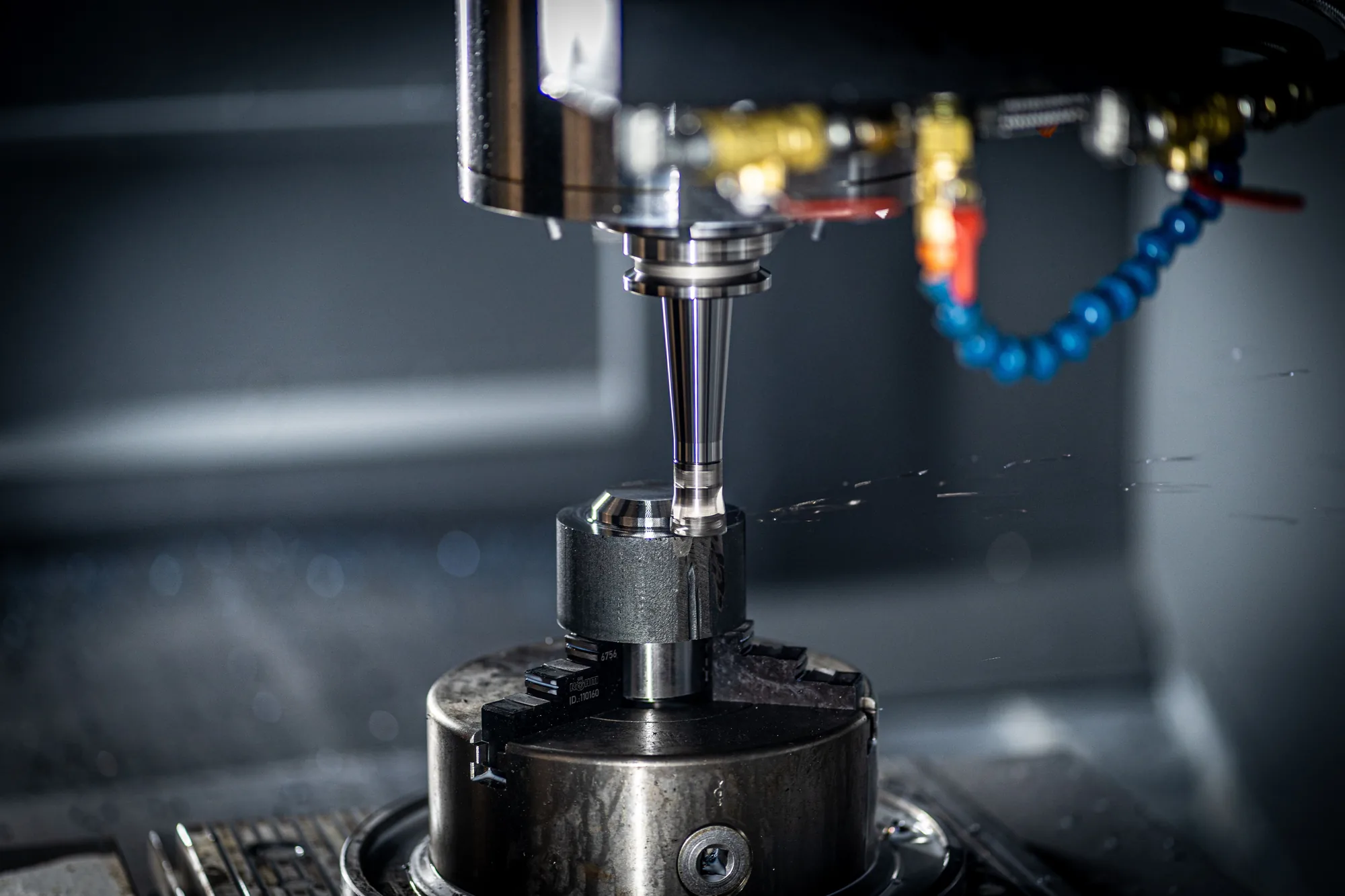
Thread standards produced to spec, with the thread, grade and finish confirmed on the drawing before production.
Upload your drawing (STEP, IGES, DWG, DXF, PDF) — we return DFM feedback and a quote within 24 hours.
- Tolerance
- ±0.01 mm
- MOQ
- From 50 pcs
- Sample
- 5–10 days
- Production
- 25–35 days
- Materials
- Aluminium · stainless · steel · brass · titanium
Standard overview
A thread is defined by its flank angle, its pitch, and the diameter it is cut on. Two systems dominate machined fasteners and fittings: the ISO metric profile and the unified inch profile. They share a 60° flank angle but describe the same geometry in different units, so their threads are not interchangeable.
The metric system names a thread by nominal diameter and pitch, both in millimetres. M6 × 1.0 is a 6 mm diameter with a 1.0 mm pitch — the axial distance from one crest to the next, and the number you read on a thread gauge. Metric threads come in coarse and fine pitches for one diameter; fine pitches have a shallower helix angle, so they hold better under vibration but cross-thread more easily.
The unified system names a thread by nominal diameter in inches and threads per inch (TPI). 1/4-20 UNC is a 1/4 in diameter with 20 threads per inch; UNC is coarse, UNF fine, UNEF extra fine. TPI is the inverse of pitch, so a 1/4-20 thread has a pitch of 1/20 in, about 1.27 mm.
Because both profiles share a 60° flank angle, a metric thread and a unified thread of similar diameter will often start to engage — which is why they are dangerous to mix. A 1/4-20 bolt will screw part way into an M6 nut before the pitches fight and the threads gall or strip. Similar diameter never means compatible thread.
Two sealing families complete the picture. BSP (British Standard Pipe) threads use a 55° flank angle; the parallel form (BSPP, commonly G) seals on a face washer, the tapered form (BSPT, commonly R) on the taper itself. NPT (National Pipe Taper) threads use a 60° angle and a taper, sealing by thread interference plus sealant. BSP and NPT are not interchangeable, and G is not R.
Most threads are right-hand and tighten clockwise. A left-hand thread carries an LH suffix — M10 × 1.5 LH or 1/4-20 UNC LH — and is used where rotation would otherwise loosen the fastener, such as a turnbuckle end.
Sizes, threads and grades we cover
The tables on this page list the coarse and fine pitches for common metric diameters alongside the unified thread counts for common inch diameters. Read them side by side and the pattern is clear: each metric diameter maps to a pitch in millimetres, each inch diameter to a count in threads per inch. The numbers sit close but never equal, so the columns must be read as separate systems, not a lookup that converts one into the other.
We machine the full ranges shown in both tables, plus fine and extra-fine pitches, left-hand threads, multi-start threads, custom leads, and threads cut to a supplied profile. A non-standard pitch or a modified crest is produced to the drawing rather than forced onto a stock insert.
Thread grade is a separate axis from thread size. For steel parts the grade is the property class — 8.8, 10.9 and 12.9 for carbon and alloy steel — and for stainless it is the A2/A4 family. Grade governs strength, not thread geometry. See our bolt grade markings page for how each grade is marked and what it means in service.
Materials and finishes
Thread form is independent of material, so one drawing can be produced in several metals for different jobs. We machine threads in aluminium 2024, 5052, 6061 and 7075; stainless steel 301, 303, 304, 304L, 316, 316L, 410, 416 and 17-4PH; carbon and alloy steel 1045, 1215, 4140, D2 and O1; brass, bronze, copper and titanium; and engineering plastics such as acetal and nylon. The choice of material changes the load a thread can carry, how deep a tapped hole can go before the tap binds, and how it behaves in service; it does not change the pitch or flank angle. The materials page lists what we run.
Finish matters most on sealing and corrosive-service threads. A tapped hole in 6061 with a fine thread benefits from a considered surface treatment to avoid galling, while 316L in a wet environment is often chosen for its corrosion behaviour rather than any coating. Plating, anodising, passivation and heat treatment are handled through our vetted partner network, managed under one quality process, so a drawing can be supplied bare or finished without re-quoting the geometry.
For a full size and pitch breakdown of each system, see our metric fasteners and inch fasteners pages.
Ordering notes
When you send a thread drawing, state the system, diameter, pitch or TPI, hand, and fit class in one line. For metric that is M8 × 1.25 — 6g external, 6H internal; for unified, 3/8-16 UNC — 2A external / 2B internal. The fit class is what turns “an M8 thread” into a specific, gaugeable part, and omitting it forces the shop to guess.
For sealing threads, name the standard and the form: G 1/4 (parallel) is a different part from R 1/4 (tapered), and neither substitutes for 1/4 NPT. If the seal is made on a face with a washer, say so; if on the taper, say that too.
When replacing an existing part, do not pick the nearest metric or inch equivalent by diameter alone. Send the mating thread’s specification, or a photograph of the thread with a scale, and let us confirm the system from measurement rather than a rounded conversion.
Send your drawing through the request a quote page and we will respond within 24 hours with pricing and DFM feedback, including whether pitch, fit class and hand are consistent with how the part will be assembled. Threads are held to ±0.01 mm on features that locate, seal or fit, with ISO 2768-m as the general tolerance unless the drawing says otherwise.
Reading a thread standard is only half of the job; the other half is deciding what to write on a drawing so the part can be inspected. A thread is specified by class, not by a millimetre band, and the difference between the two shows up at first article. The working version of that rule is set out in custom screw tolerance, and the parts it applies to are the custom screws turned in 303, 316 and 12L14.
Metric thread sizes, pitches and hex dimensions
| Nominal size | Coarse pitch (mm) | Fine pitch (mm) | s (across flats) (mm) | k (head height) (mm) |
|---|---|---|---|---|
| M1.6 | 0.35 | 0.2 | 3.2 | 1.2 |
| M2 | 0.4 | 0.25 | 4 | 1.5 |
| M2.5 | 0.45 | 0.35 | 5 | 1.8 |
| M3 | 0.5 | 0.35 | 5.5 | 2.1 |
| M4 | 0.7 | 0.5 | 7 | 2.9 |
| M5 | 0.8 | 0.5 | 8 | 3.5 |
| M6 | 1 | 0.75 | 10 | 4 |
| M8 | 1.25 | 1 | 13 | 5.3 |
| M10 | 1.5 | 1.25 | 16 | 6.4 |
| M12 | 1.75 | 1.25 | 18 | 7.5 |
| M16 | 2 | 1.5 | 24 | 10 |
| M20 | 2.5 | 1.5 | 30 | 12.5 |
| M24 | 3 | 2 | 36 | 15 |
| M30 | 3.5 | 2 | 46 | 18.7 |
| M36 | 4 | 3 | 55 | 22.5 |
| M42 | 4.5 | 3 | 65 | 26 |
| M48 | 5 | 3 | 75 | 30 |
| M56 | 5.5 | 4 | 85 | 35 |
| M64 | 6 | 4 | 95 | 40 |
Pitch per ISO 261. s = width across flats and k = head height for hex head bolts per ISO 4014. Fine pitches shown are the commonly used options; other pitches exist for special work.
Unified inch threads — threads per inch (ASME B1.1)
| Nominal size | UNC (threads/in) | UNF (threads/in) | Decimal (in) | Millimetre (mm) |
|---|---|---|---|---|
| #0 | 80 | 80 | 0.06 | 1.524 |
| #1 | 64 | 72 | 0.073 | 1.854 |
| #2 | 56 | 64 | 0.086 | 2.184 |
| #3 | 48 | 56 | 0.099 | 2.515 |
| #4 | 40 | 48 | 0.112 | 2.845 |
| #5 | 40 | 44 | 0.125 | 3.175 |
| #6 | 32 | 40 | 0.138 | 3.505 |
| #8 | 32 | 36 | 0.164 | 4.166 |
| #10 | 24 | 32 | 0.19 | 4.826 |
| #12 | 24 | 28 | 0.216 | 5.486 |
| 1/4 | 20 | 28 | 0.25 | 6.35 |
| 5/16 | 18 | 24 | 0.3125 | 7.938 |
| 3/8 | 16 | 24 | 0.375 | 9.525 |
| 7/16 | 14 | 20 | 0.4375 | 11.113 |
| 1/2 | 13 | 20 | 0.5 | 12.7 |
| 9/16 | 12 | 18 | 0.5625 | 14.288 |
| 5/8 | 11 | 18 | 0.625 | 15.875 |
| 3/4 | 10 | 16 | 0.75 | 19.05 |
| 7/8 | 9 | 14 | 0.875 | 22.225 |
| 1 | 8 | 12 | 1 | 25.4 |
| 1-1/8 | 7 | 12 | 1.125 | 28.575 |
| 1-1/4 | 7 | 12 | 1.25 | 31.75 |
| 1-3/8 | 6 | 12 | 1.375 | 34.925 |
| 1-1/2 | 6 | 12 | 1.5 | 38.1 |
UNC is the coarse series and UNF the fine series. Nominal sizes from #0 to 1-1/2 in are shown; larger sizes and the UNEF extra-fine series are quoted per drawing.
Need a size or thread that is not listed? Send the drawingand we will confirm what we can hold.
Frequently asked questions
What is the difference between a metric thread and a unified (inch) thread?
Both use a 60° flank angle, but a metric thread is described by its diameter and pitch in millimetres (M6 × 1.0), while a unified thread is described by its diameter in inches and threads per inch (1/4-20 UNC). The geometries are close but not identical, so the two systems are not interchangeable.
What does M6 × 1.0 mean?
It is a metric thread with a 6 mm nominal outside diameter and a 1.0 mm pitch. The pitch is the axial distance from one crest to the next.
What does 1/4-20 UNC mean?
It is a unified coarse thread with a 1/4 in nominal diameter and 20 threads per inch. The pitch is the inverse of the thread count, about 1.27 mm.
Are an M6 bolt and a 1/4-20 bolt interchangeable?
No. The diameters are close and the two will start to engage, but the pitches differ, so the threads bind and gall after a turn or two. A similar diameter never means a compatible thread.
What is the difference between pitch and threads per inch?
Pitch is the distance between crests, normally stated in millimetres for metric threads. Threads per inch is a count of crests per inch of length, so the pitch in inches is 1 divided by the TPI. They describe the same thing in reciprocal units.
What is the difference between BSPP and BSPT?
BSPP (commonly G) is a parallel British pipe thread that seals on a face with a washer, while BSPT (commonly R) is tapered and seals on the taper itself. They are different forms and are not interchangeable.
What is the difference between BSP and NPT?
BSP uses a 55° flank angle and NPT uses 60°, and their pitches and tapers differ, so they do not seal together. The parallel and tapered forms within each family also differ from each other.
What does a left-hand thread mean?
A left-hand thread tightens counter-clockwise and is marked with an LH suffix, such as M10 × 1.5 LH. It is used where normal rotation would loosen a right-hand thread, such as turnbuckle ends.
How do I identify an unknown thread by measurement?
Measure the outside diameter with a caliper and the pitch with a thread gauge, then compare against the metric pitch and unified TPI tables on this page. If the gauge sits flat on both systems, the diameter will tell you which family it belongs to.
What is a fine pitch thread and when should I use it?
A fine pitch has a smaller pitch than the coarse series for the same diameter, giving a shallower helix angle. It resists vibration loosening better but cross-threads more easily during assembly.
What fit class should I specify for a metric or unified thread?
For metric threads use 6g for the external thread and 6H for the internal; for unified use 2A external and 2B internal as the common general-purpose fits. State the class on the drawing so the shop does not have to guess.
Can you machine non-standard or custom threads?
Yes. We produce the ranges shown in the tables plus fine, extra-fine, left-hand, multi-start and custom-lead threads cut to your drawing or profile.
Send your drawing — quote in 24 hours
DFM feedback, material certificates and pre-shipment photos come with every order.