CNC machining materials
Materials
Materials we machine: stainless steel, aluminium, carbon and alloy steel, brass, copper, titanium and engineering plastics, quoted per drawing.
Upload your drawing (STEP, IGES, DWG, DXF, PDF) — we return DFM feedback and a quote within 24 hours.
CNC machining materials for custom parts
Material selection affects machining time, part weight, corrosion resistance, strength, finish, price and lead time. The safest way to request a quote is to name the exact grade on the drawing or RFQ rather than writing only “steel,” “aluminium” or “stainless.” We review the material against the geometry and the required tolerance, then confirm the grade and documentation in the quote.
The material families below cover the common requirements for turned parts, milled parts, custom fasteners, housings, brackets, shafts and production components. A material certificate (MTR) is supplied with every order. If your program requires a particular standard, heat condition, hardness or additional certificate, include it with the drawing before pricing.
Stainless steel
Stainless options include 301, 303, 304 and 304L, 316 and 316L, 410, 416 and 17-4PH. 303 is commonly selected when machinability matters; 304, 304L, 316 and 316L are reviewed for corrosion-related requirements; 301 is used where the part has to take cold working or a spring temper; 410 and 416 are the hardenable grades, with 416 the free-machining variant; 17-4PH is considered when strength and heat treatment are part of the specification. Use the drawing to identify the exact grade, condition and finish. Related details are on the stainless steel parts page.
Aluminium
Aluminium options include 2024, 5052, 6061 and 7075. Aluminium is useful when low weight, machinability or anodized surfaces matter. 6061 is a common general-purpose choice, 5052 is the grade usually picked when formability and corrosion resistance matter more than strength, and 7075 and 2024 are reviewed when the drawing calls for a different strength or application requirement. Specify whether the part needs clear, black or another anodized finish, and identify any faces that must remain masked. See aluminum parts.
Carbon and alloy steel
Steel options include the carbon grades 1008/1018, 1045 and 1095, the free-cutting grades 1215 and 12L14, the alloy grades 4130 and 4140, and the tool steels D2 and O1. The right grade depends on strength, wear, thread performance, heat treatment and the environment around the part. A steel bracket, shaft, bolt or fixture may need a different route from a small turned component. State the grade, hardness or heat-treatment requirement on the drawing so the machining and finishing route can be quoted together. See steel parts.
Brass, copper and bronze
Brass and copper are used for fittings, adapters, electrical hardware, bushings and other parts where machinability, conductivity or corrosion behavior matters. Listed options include brass 260 and 360 (C360), copper 101 and 110 (C110), and bronze. Threads, thin walls and small bores should be shown clearly because they can affect tool selection and cycle time. See brass and copper parts.
Titanium
Titanium is available in Grade 2 (commercially pure) and Grade 5, also known as Ti-6Al-4V. Grade 2 is the softer, more formable option, used where corrosion resistance matters more than strength; Grade 5 is chosen for parts where the drawing requires its strength-to-weight and corrosion characteristics. Titanium needs a controlled machining approach because cutting conditions and tool wear affect cost and lead time. Send the full grade, quantity, tolerance and finish so the process can be reviewed from the drawing rather than estimated from the material name alone. See titanium parts.
Engineering plastics and elastomers
Not every part is metal. Acetal (POM), nylon (including PA 2200), polycarbonate, polyethylene (HDPE), polypropylene, acrylic, PTFE and FR4 glass-epoxy are all machined for parts where weight, electrical insulation, chemical resistance or a non-marring surface decides the choice — jigs and fixtures, insulators, spacers, wear pads, manifolds and prototypes. Acetal and nylon machine cleanly and hold a thread; PTFE is chosen for chemical and low-friction duties; FR4 is the usual answer for electrical hardware. Elastomers — NBR nitrile, neoprene and silicone — are supplied as machined parts, or as moulded parts where the geometry and the volume suit a tool; see injection molding.
Two things are worth stating up front on plastics. They move more with temperature than metals do, so give us the service temperature and say whether the tolerance has to hold at that temperature or only at room temperature. And the paperwork is different — there is no mill test report for a polymer, so tell us at the quote stage what your program actually requires and we will confirm what can be supplied with the batch.
How we buy material
We are not a material stockholder. Nothing on this page is sitting on a shelf waiting for an order — material is bought against your drawing, for your job, once the order is placed. That is worth knowing because it changes two things you might otherwise expect.
First, lead time. Production runs 25–35 days after sample approval, and that clock starts when the stock lands on our floor, not when you send the drawing. Common grades in common sizes move quickly through the Chinese supply chain and add nothing measurable. An unusual grade, a temper nobody keeps, a diameter outside the usual range or a plate thickness that has to be rolled to order can add days. We flag that in the quote rather than letting you discover it three weeks later.
Second, documentation. Material arrives with the mill’s test report for the heat it came from, and that report becomes the material certificate (MTR) that ships with your batch. The MTR is traceable to the heat, so the grade on the paper is the grade in the part. Read more on the material certificates page.
The buying route gives you access to both domestic Chinese mill material and imported stock, so a drawing that names an ASTM, EN, DIN or JIS grade is usually covered by one or the other. When the quote confirms your grade, that is the grade we buy. If a mill substitution ever became unavoidable, you would be asked in writing before anything was cut — we do not downgrade a material quietly.
If you would rather supply the material yourself, that works too. Free-issue stock is machined, the balance is returned or accounted for, and the MTR obligation stays with your supplier. Say so at the quote stage and we will price the machining separately from the material.
How to specify material in an RFQ
Include the material grade, condition or hardness when applicable, quantity, surface finish, critical tolerances and required documentation. Samples typically ship in 5-10 days and production in 25-35 days after drawing approval. Production orders start from 50 pieces per style and material, while prototype quantities are reviewed against the drawing.
For help choosing a process, compare CNC machining, CNC turning and CNC milling. To request pricing, send the drawing, material callout and quantity through the request a quote form.
What the grades look like as stock
The seven families below are the ones we hold or buy most often. The form matters as much as the grade: bar is bought by diameter for turned parts, plate by thickness for milled parts, and the same alloy in a different form quotes differently.
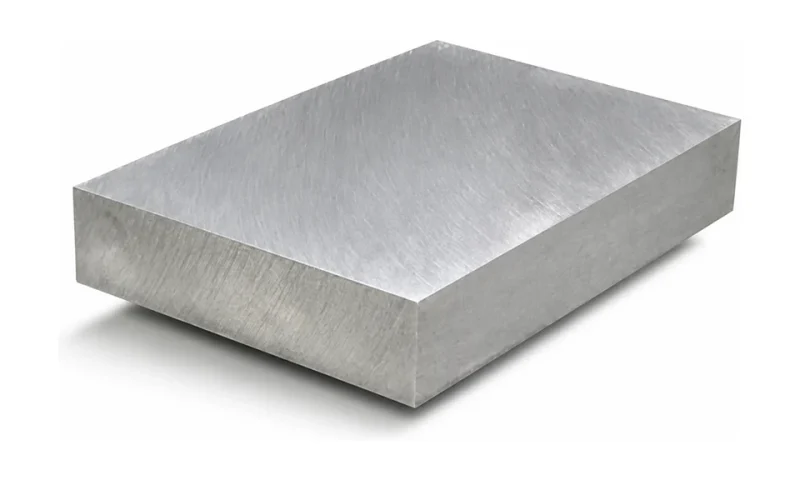
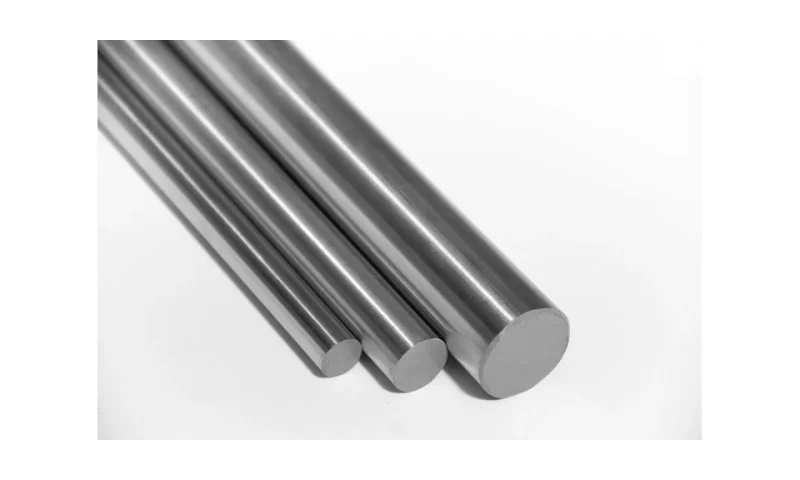
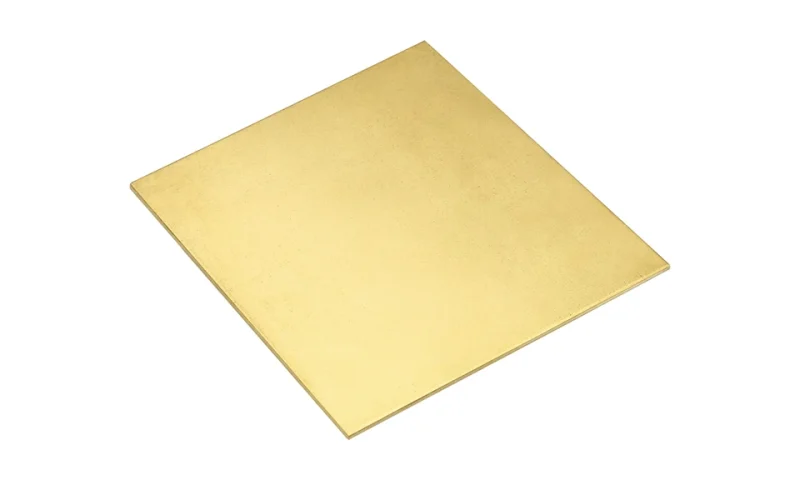
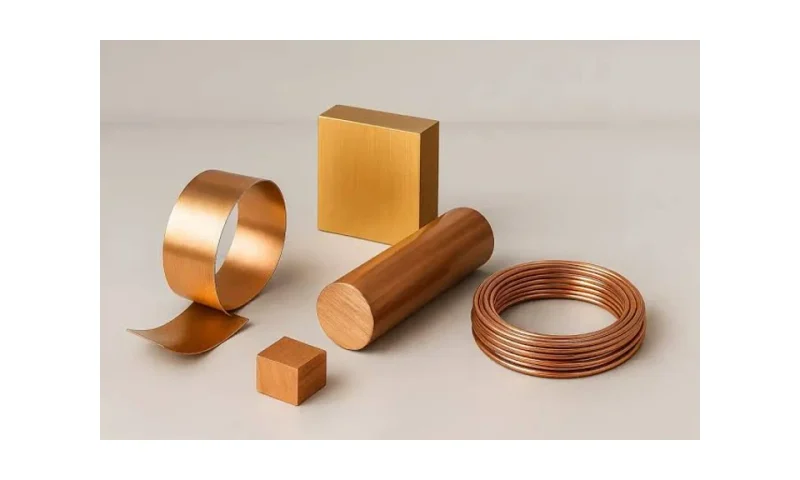
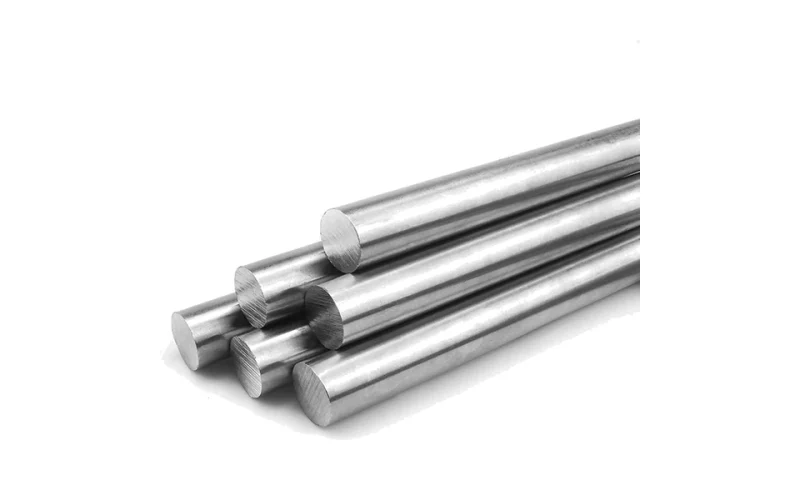
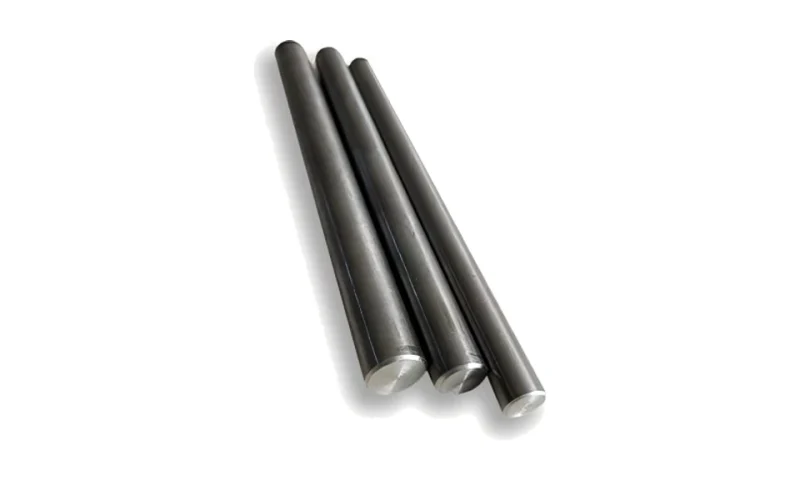
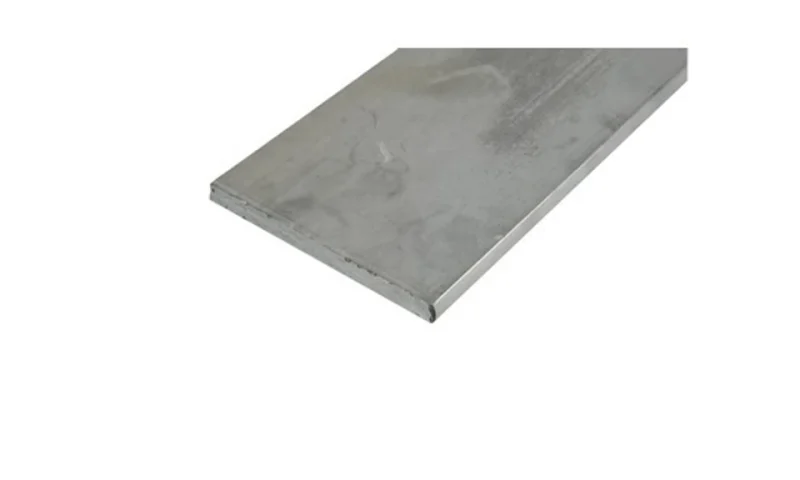
Grade reference table — the numbers behind the choice
Buyers usually arrive with a family in mind and a grade to confirm. This table is the confirmation: typical mechanical values at room temperature for the grades we machine most, plus the machinability rating that decides how the same geometry prices out in each one.
| Grade | Family | Density (g/cm³) | Tensile (MPa) | Yield (MPa) | Melting (°C) | Machinability | Typical use |
|---|---|---|---|---|---|---|---|
| 6061-T6 | Aluminium | 2.70 | 310 | 276 | 582–652 | Very good | Housings, brackets, manifolds, general parts |
| 7075-T6 | Aluminium | 2.81 | 572 | 503 | 477–635 | Good | High-strength parts, aerospace fittings |
| 2024-T4 | Aluminium | 2.78 | 469 | 324 | 502–638 | Good | Fatigue-loaded aircraft parts |
| 303 | Stainless | 7.90 | 620 | 240 | 1400–1450 | Excellent (free-cutting) | Screws, shafts, bushings — the default stainless for turned parts |
| 304 / 304L | Stainless | 8.00 | 505 | 215 | 1400–1450 | Fair (work-hardens) | Food, chemical, general corrosion resistance |
| 316L | Stainless | 8.00 | 485 | 170 | 1375–1400 | Fair | Marine, medical, chloride environments |
| 17-4 PH | Stainless | 7.80 | 1000–1100 (H900) | 850–1000 | 1400–1440 | Fair | High-strength shafts, valve parts |
| H62 (CuZn38) | Brass | 8.40 | 370 | 200 | 900–940 | Excellent | Electrical, decorative, fittings |
| C110 | Copper | 8.94 | 220–250 | 70 | 1083 | Good (gummy) | Conductors, heat sinks |
| 1045 | Carbon steel | 7.85 | 585–620 (normalised) | 310–350 | 1425–1540 | Good | Shafts, gears, general mechanical parts |
| TC4 (Ti-6Al-4V) | Titanium | 4.43 | 950 | 880 | 1604–1660 | Poor (slow, tool wear) | Aerospace, medical implants, high strength-to-weight |
| Zamak 3 | Zinc alloy | 6.60 | 283 | 208 | 384–386 | Excellent | Die-cast style parts, hardware, decorative |
Three things to read out of the table, beyond the numbers.
Density decides the material bill, not the grade name. A 7075 part costs more than a 6061 part not only because the alloy is dearer but because the same block weighs 4% more. On a large housing that is a visible line.
Machinability decides the cycle time, which is the bigger line at volume. 303 stainless machines roughly twice as fast as 304 for the same feature, which is why free-cutting grades exist and why a switch from 304 to 303 can cut the piece price without changing the part.
Melting point matters for the process, not the part. It tells you whether a heat treatment or a coating can be applied afterwards without distorting the geometry — which is why the finishing choice is often made at the same time as the grade.
Values are typical published figures for the grade and condition shown; the certificate that ships with the order states the actual heat and the actual test result. Where a part needs a specific condition (H900, annealed, cold-drawn), say so on the drawing — the condition changes the numbers more than the alloy does.
Material by process
Each page below covers one material in one process — the grades we run, how that material behaves on that machine, the tolerance it holds, the finishes that suit it and the parts it is usually chosen for. 65 pages published so far.
Aluminium

Sheet Metal Fabrication
Stainless Steel
CNC Machining


Sheet Metal Fabrication
Carbon Steel

Sheet Metal Fabrication
Alloy & Tool Steel
Brass, Copper & Bronze


Sheet Metal Fabrication


Engineering Plastics
CNC Machining


Rubber & Silicone
Injection Molding


Other materials on request
Grades outside the standard range above. They are not held as a standing range — if your drawing calls for one of them, tell us the grade with the enquiry and we will confirm availability and lead time before you order.
 ACM Panel
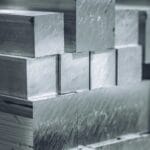 6061 Aluminium Billet
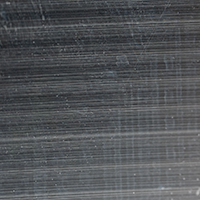 MIC-6 Cast Aluminium
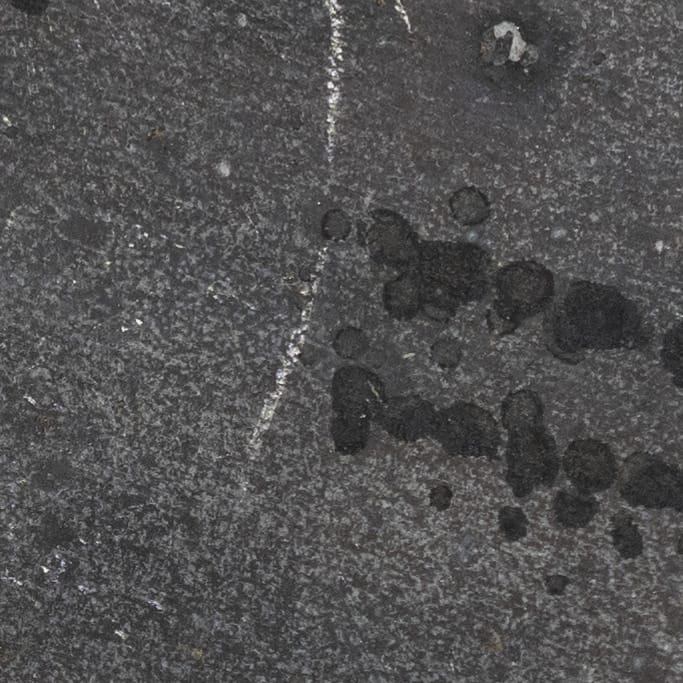 AR400 Wear Steel
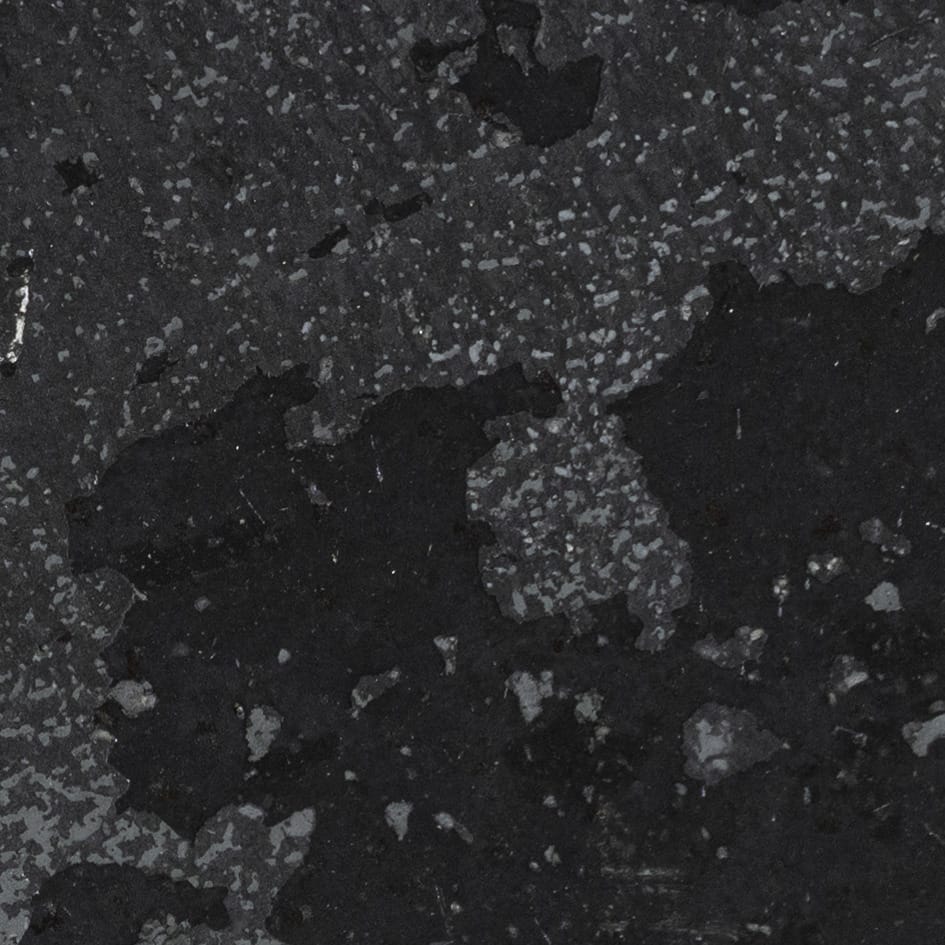 AR500 Wear Steel
 1075 Spring Steel
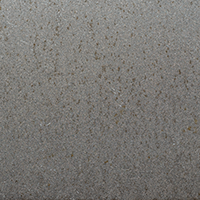 CPM MagnaCut
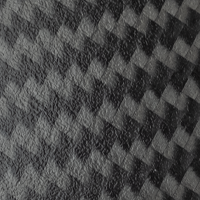 Carbon Fibre
 UHMW
 Viton FKM
 Polyethylene Foam
 Mylar
 LE Phenolic Linen
 Gasket Cork
 Baltic Birch Plywood
 MDF
 Chipboard
 Hardboard
 3M VHB Tape
Machining materials — grades, forms, condition and the standards they are bought to
| Material | Forms we machine from | Condition | Usual purchasing standard | Where it is used |
|---|---|---|---|---|
| Stainless steel 303 | Bar | Annealed, cold drawn | ASTM A582 | High-volume turned parts, fittings, nuts, threaded inserts |
| Stainless steel 304 / 304L | Bar, plate, tube, sheet | Annealed | ASTM A276 / A479 | General corrosion-resistant parts, food and dairy hardware |
| Stainless steel 316 / 316L | Bar, plate, tube, sheet | Annealed | ASTM A276 / A479 | Marine, chemical, pump and medical hardware |
| Stainless steel 17-4PH | Bar | Solution treated and aged | ASTM A564 | High-strength shafts, valve parts, instrument hardware |
| Aluminium 6061 | Bar, plate, tube, extrusion | T6, T651 | ASTM B221 / B209 | Brackets, housings, manifolds, base plates |
| Aluminium 7075 | Bar, plate | T6, T651 | ASTM B221 / B209 | High-strength structural parts and tooling |
| Aluminium 2024 | Bar, plate | T4, T351 | ASTM B211 / B209 | Aerospace structures where fatigue performance matters |
| Carbon steel 1045 | Bar, plate | Hot rolled, cold drawn, normalised | ASTM A29 / A108 | Shafts, studs, pins, spindles |
| Carbon steel 1215 | Bar | Cold drawn, free machining | ASTM A29 / A108 | High-volume turned parts, screws, small fittings |
| Alloy steel 4140 | Bar, plate, tube | Annealed or quenched and tempered | ASTM A29 / A322 | Shafts, gears, couplings, high-strength studs |
| Brass, free cutting | Bar, tube, plate | Half hard, quarter hard | ASTM B16 / B453 | Fittings, adapters, terminals, bushings, valve parts |
| Copper | Bar, plate, tube | Soft, half hard | ASTM B187 / B152 | Electrical hardware, contacts, bushings |
| Bronze | Bar, tube, cast stock | As cast, annealed | ASTM B505 / B584 | Bushings, wear plates, pump and valve parts |
| Titanium Grade 5 | Bar, plate | Annealed | ASTM B348 / B265 | Aerospace and high-strength structural hardware |
Standard designations are given as the usual purchasing reference. Any grade, temper or hardness the drawing names is confirmed in the quote, and a material certificate (MTR) travels with every batch.
Need a size or thread that is not listed? Send the drawingand we will confirm what we can hold.
Send your drawing — quote in 24 hours
DFM feedback, material certificates and pre-shipment photos come with every order.