steel machined parts
Carbon & Alloy Steel Machined Parts — 1045, 1215, 4140
Steel machined parts machined to your drawing, with grade selection advice and material certificates supplied with the order.
Upload your drawing (STEP, IGES, DWG, DXF, PDF) — we return DFM feedback and a quote within 24 hours.
- MOQ
- From 50 pcs
- Sample
- 5–10 days
- Production
- 25–35 days
- Finishing
- Through partner network
- Documents
- MTR + pre-shipment photos
Grades we machine
We machine steel machined parts from nine grades that between them cover most carbon, alloy and tool steel work: 1008/1018, 1045 and 1095 carbon steel, 1215 and 12L14 free-cutting steel, 4130 and 4140 alloy steel, and D2 and O1 tool steel. They are not interchangeable, and the choice between them usually comes down to three questions — how much strength the part really needs, how it will be loaded, and whether it will be heat treated or welded. We match the grade to those answers rather than defaulting to a single alloy.
- 1008/1018 steel is the low-carbon end of the range. It does not carry much load on its own, but it welds and forms readily and case-hardens well, which makes it the usual choice for brackets, pins and parts that are welded or bent rather than heavily stressed.
- 1215 steel is a free-machining carbon steel with sulphur added to the melt. The sulphur breaks chips into short fragments, so the grade turns and drills fast, leaves a fine surface straight off the tool, and keeps cycle times down on high-volume work. The trade-off is lower weldability and toughness than 1045, which is why we point 1215 toward fasteners, spacers, and other parts machined in quantity that will not be welded.
- 12L14 steel is the leaded free-machining grade, and the fastest-cutting carbon steel we run. The lead addition gives it the best surface finish straight off the tool of any grade on this page, which is why it suits small turned parts, connectors and fittings where the as-machined finish matters and the part is not welded.
- 1045 steel is a medium-carbon grade and the general workhorse of the group. It carries reasonable strength as supplied and, thanks to its carbon level, responds well to heat treatment when a part needs more. It is the natural fit for shafts, studs, pins, spindles, and gears that may be hardened later.
- 1095 steel is the high-carbon grade. It takes a high hardness and holds a keen edge or a wear-resistant face, at the cost of toughness and weldability, so it is reserved for wear parts, blades and springs rather than structural work.
- 4130 steel is a chromium-molybdenum alloy steel used where strength and weldability are needed together. It is a common tubing and structural grade, and it is the sensible choice when a welded frame or a fabricated assembly also has to carry load.
- 4140 steel is a chromium-molybdenum alloy steel, and it is the grade to reach for when a part needs strength plus toughness. It responds the most of the group to hardening and tempering, so shafts, gears, couplings, and high-strength studs can be taken to a higher hardness while staying tough through the core.
- D2 and O1 tool steel cover the tooling end of the range. D2 is a high-chromium, air-hardening tool steel with high wear resistance, used for dies, punches and wear plates after hardening; O1 is the oil-hardening tool steel, easier to machine and to harden than D2 and the usual choice for short-run tooling, gauges and cutting tools. Both are supplied soft and hardened to the drawing.
The grade is only half of the specification. The condition — hot rolled, cold drawn, normalised, annealed, or quenched and tempered — is just as much a part of it, because the condition changes both the machining route and the price. A cold drawn 1045 bar turns more consistently and holds size better than the same grade hot rolled, while a 4140 part ordered annealed machines very differently from one already quenched and tempered. Tell us the grade, the condition, and the hardness target on the drawing, and we quote the route that gets the part there for the most cost-effective price.
Machining characteristics of steel machined parts
Carbon and alloy steel machine with a predictable balance between cutting speed, tool wear, and chip control, and the behaviour changes a lot from grade to grade and condition to condition. Free-machining 1215 produces short, broken chips and holds tight features easily, which is why it dominates high-volume turned work. 1045 cuts a little slower but still machines cleanly in the cold drawn condition. 4140 is the toughest of the group on tooling, and in the quenched and tempered condition it is usually finished by grinding rather than cutting.
Condition matters before the first chip is taken. Hot rolled bar arrives with scale and a looser surface, so we machine it with enough stock to clean up. Cold drawn bar is more consistent in size and roundness and needs less material removed, which often makes it the more cost-effective route for shafts and pins. Normalised and annealed conditions suit parts that will be heat treated again after roughing, and quenched and tempered bar is supplied already hardened when the customer wants to keep machining to a minimum.
Heat treatment changes the part as well as the material. Hardening and tempering raises strength and hardness, but it also moves the part slightly, and that movement can spoil a feature already cut to size. For that reason a hardened steel part is almost always machined soft, then hardened, then finished. The finishing pass on a hardened part is frequently grinding, because a hard surface is exactly what grinding is designed for and it holds size and finish where a cutting tool would struggle.
Stress relief matters before final machining for the same reason. A part that has been welded, forged, or heavily machined carries internal stress, and if you cut it to final size first it can move as that stress lets go. Stress relieving lets the part settle before the final cuts, so the dimensions we machine are the dimensions we ship. If the drawing calls out a hardness requirement, state it as a range on the drawing — we plan the hardening around that range and confirm the target with you before we start.
All of this happens on our own floor in Qidong City, Jiangsu Province, China. We hold ±0.01 mm on precision features and work to ISO 2768-m as the general tolerance unless the drawing states otherwise, with a milling envelope of 800 × 500 mm and capacity for over 100,000 parts per month.
Typical parts made from this material
Steel covers the bulk of fastener and structural work, and the same three grades show up again and again across the parts we ship.
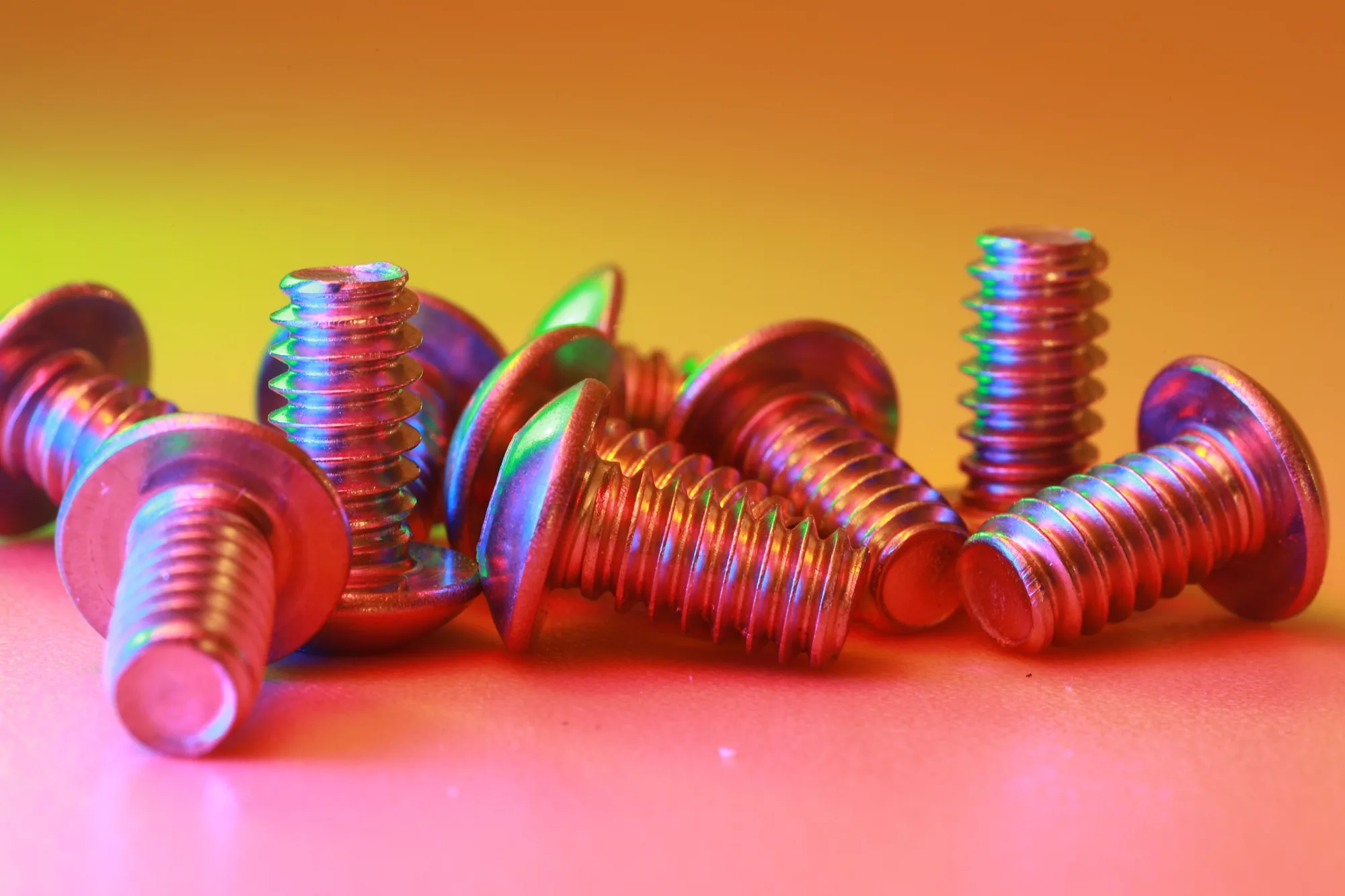
- Steel bolts, steel nuts, and washers — high-volume 1215 for standard fasteners, with 4140 where strength is specified on the drawing.
- Steel screws, studs and threaded rods, and high-strength studs in 1045 or 4140 for assemblies that have to stay tight under load.
- Shafts, pins, and spindles in 1045 or 4140, often hardened and then ground to finish.
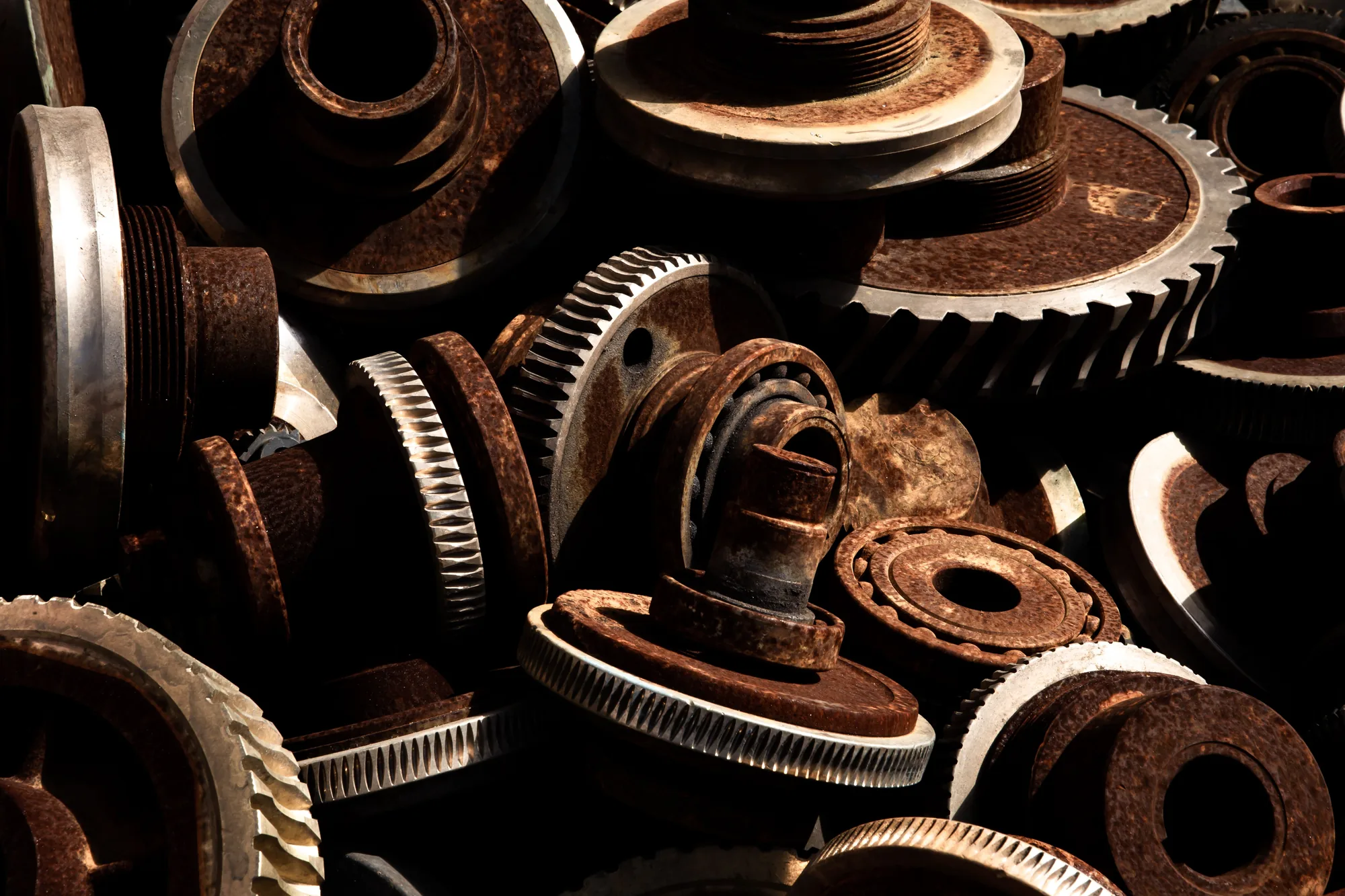
- Gears and couplings in 1045 or 4140 where the part has to carry torque without wearing quickly.
- Bushings and sleeves and spacers and standoffs in 1215 or 1045 for wear surfaces and alignment.
Orders start at 50 pieces per style and material, and samples start from a single piece. A material certificate (MTR) ships with every batch, and we quote within 24 hours with DFM feedback on the grade, the condition, and the most cost-effective route to your tolerance.
Surface finishes that pair well
Bare carbon steel rusts, so almost every steel part we ship carries a finish. Surface finishing always runs through our vetted partner network, managed under one quality process, and it is quoted as part of the same order so the finish and the machining stay coordinated.
- Zinc plating — the standard corrosion coating for steel fasteners, available clear, yellow, or blue.
- Black oxide — a thin black finish for appearance and light corrosion resistance.
- Nickel plating and chrome plating — where higher corrosion resistance or a bright, hard surface is required.
- Heat treatment — not a surface finish in itself, but it is usually paired with one, since hardening 1045 or 4140 changes the surface the finish will sit on.
Plating and heat treatment are written into the same quote as the machining, so you get one order, one lead time, and one place to ask questions. Production runs 25–35 days after sample approval, and samples take 5–10 days. For help choosing a grade, condition, or finish, request a quote and we will come back within 24 hours with DFM feedback.
Specifications
| Grades | 1008/1018, 1045, 1095, 1215, 12L14, 4130, 4140, D2, O1 |
|---|---|
| Material type | Carbon steel (1045, 1215) and chromium-molybdenum alloy steel (4140) |
| Forms | Bar, rod, plate, and forgings |
| Conditions | Hot rolled, cold drawn, normalised, annealed, quenched and tempered |
| Heat treatment | Hardening and tempering, stress relief, through our vetted partner network |
| Tolerance | ±0.01 mm on precision features |
| General tolerance | ISO 2768-m unless stated on the drawing |
| Milling envelope | 800 × 500 mm |
| Surface finishes | Zinc plating, black oxide, nickel plating, chrome plating |
| Surface finishing route | Through our vetted partner network, managed under one quality process |
| MOQ | From 50 pieces per style and material |
| Samples | From 1 piece, delivered in 5–10 days |
| Production lead time | 25–35 days after sample approval |
| Quoting | Within 24 hours with DFM feedback |
| Documents | Material certificate (MTR) and pre-shipment photos |
Carbon and alloy steel grades we machine
| Grade | Type | Condition | What it is chosen for | Typical parts |
|---|---|---|---|---|
| 1045 | Medium carbon steel | Hot rolled, cold drawn, normalised, induction hardened | A workhorse medium-carbon grade — reasonable strength as supplied and it responds well to heat treatment | Shafts, studs, pins, spindles, gears |
| 1215 | Free-machining carbon steel | Cold drawn | Sulphur added so it machines fast and leaves an excellent finish — made for high-volume turning | High-volume turned parts, screws, small fittings, inserts |
| 4140 | Chromium-molybdenum alloy steel | Annealed or quenched and tempered | Good strength and toughness together, with a strong response to hardening and tempering | Shafts, gears, couplings, high-strength studs, tooling |
Whether a grade is supplied annealed, normalised or quenched and tempered changes both the machining route and the price. Say which you need on the drawing.
Need a size or thread that is not listed? Send the drawingand we will confirm what we can hold.
Frequently asked questions
What grades of steel do you machine?
We machine carbon grades 1008/1018, 1045 and 1095, free-cutting grades 1215 and 12L14, alloy grades 4130 and 4140, and tool steels D2 and O1. 1215 and 12L14 are the free-machining carbon steels for high-volume fasteners, 1045 is the medium-carbon workhorse, 4140 is the chromium-molybdenum alloy steel for heat-treated, load-bearing parts, and D2 and O1 cover tooling and wear parts. We confirm the grade in DFM feedback against your drawing.
Which steel should I choose — 1045, 1215, or 4140?
Choose 1215 for high-volume turned parts that will not be welded and need a fine surface off the tool. Choose 1045 for shafts, pins, and general parts that may be hardened later. Choose 4140 when the part needs strength plus toughness and will be quenched and tempered to a drawing-specified hardness. We also confirm the choice in DFM feedback.
What is the difference between 1045, 1215, and 4140?
1215 has sulphur added for free machining, so it turns fast and holds a good finish but welds and toughens poorly. 1045 is a medium-carbon steel with a useful balance of strength and machinability. 4140 adds chromium and molybdenum, giving the best strength and toughness of the three and the strongest response to hardening and tempering.
Do you make steel bolts and nuts?
Yes. Steel bolts and nuts, steel screws, washers, studs, and threaded rods are standard orders. Carbon steel fasteners and alloy steel fasteners are both available, with a material certificate (MTR) shipping with every batch. Orders start at 50 pieces per style and material.
What tolerance can you hold on steel machined parts?
We hold ±0.01 mm on precision features and work to ISO 2768-m as the general tolerance unless your drawing states otherwise. Free-machining 1215 holds tight features easily, while a hardened 4140 part is usually ground on the finish pass to keep size and surface stable.
What does the material condition mean, and why does it matter?
The condition describes how the bar was processed before machining — hot rolled, cold drawn, normalised, annealed, or quenched and tempered. It changes both the machining route and the price, because a cold drawn bar machines more consistently than a hot rolled one and an annealed part cuts very differently from a hardened one. We quote the condition that best fits your part and drawing.
Can you heat treat 1045 or 4140?
Yes. 1045 and 4140 can be hardened and tempered to the hardness your drawing specifies. Heat treatment is handled through our vetted partner network and quoted as part of the same order, with the target hardness confirmed before we start.
Do you machine a hardened part hard or soft?
We machine the part soft, harden it, and then finish it. Hardening moves the part slightly, so finishing after heat treatment keeps the final dimensions right, and on a hardened surface that finishing pass is usually grinding.
Why does stress relief matter before final machining?
Welding, forging, and heavy cutting leave internal stress in the steel. If a stressed part is cut to final size first, it can move as that stress lets go. Stress relieving lets the part settle before the final cuts, so the dimensions we machine are the dimensions that ship.
How do I specify a hardness requirement on the drawing?
Call out the hardness as a range on the drawing or in the notes, together with the grade and condition. We plan the hardening around that range and confirm the target with you before we start, rather than assuming a value.
How do you protect steel parts from rust?
Bare carbon steel rusts, so most steel parts get a finish. Zinc plating is the standard corrosion coating, and black oxide gives a thin black appearance. Both are applied through our vetted partner network, managed under one quality process.
What documents ship with steel parts?
Every batch ships with a material certificate (MTR) and pre-shipment photos. Tell us the grade, finish, and any heat treatment up front, and we quote within 24 hours with DFM feedback on the best way to machine and finish the part.
What is your MOQ and lead time for steel parts?
Orders start at 50 pieces per style and material, with samples available from a single piece. Samples take 5–10 days and production takes 25–35 days after sample approval.
Send your drawing — quote in 24 hours
DFM feedback, material certificates and pre-shipment photos come with every order.