nickel plating
Nickel Plating — Electroless & Electroplated
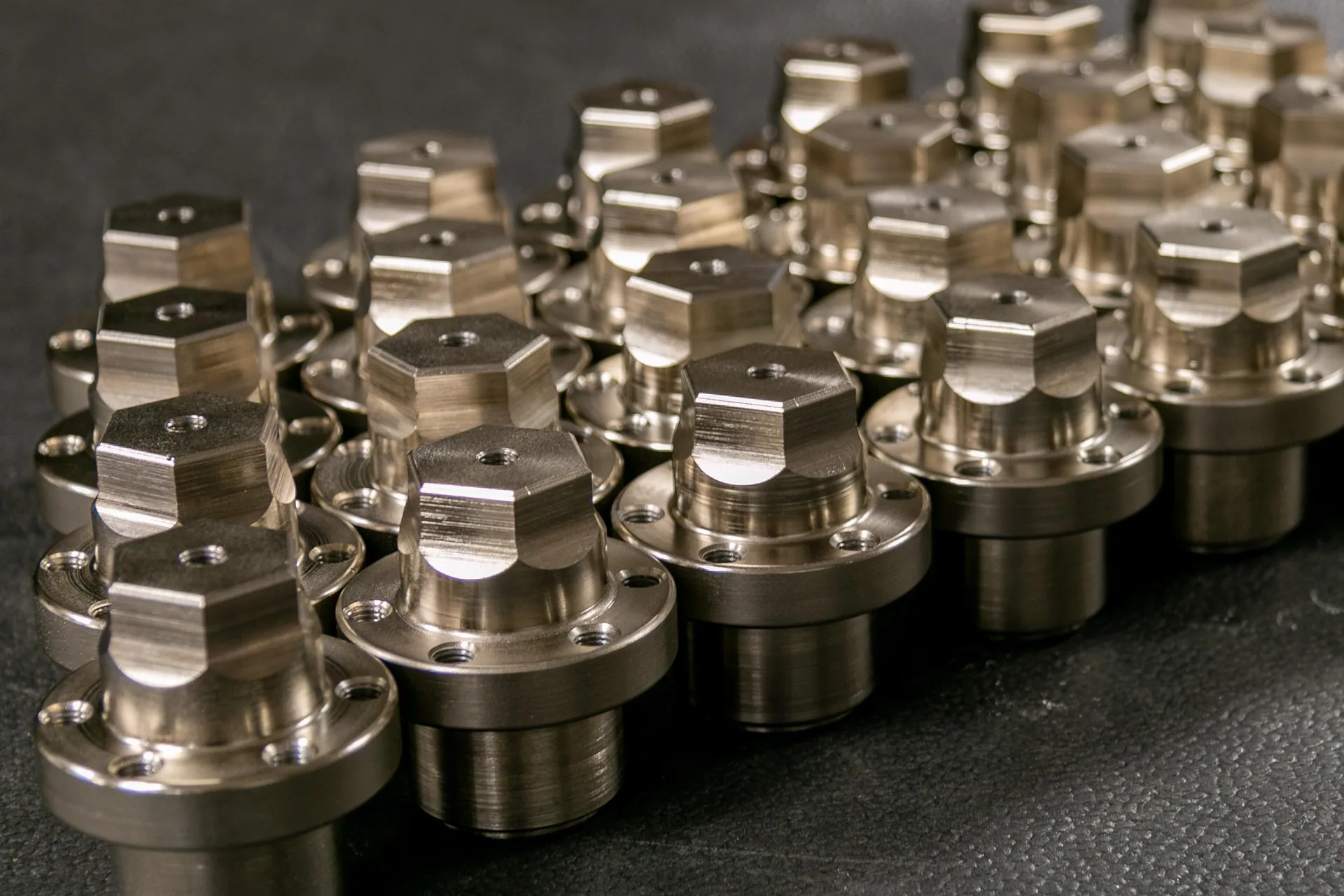
Nickel plating applied to machined parts, with the dimensional impact checked before and after finishing.
Upload your drawing (STEP, IGES, DWG, DXF, PDF) — we return DFM feedback and a quote within 24 hours.
- MOQ
- From 50 pcs
- Sample
- 5–10 days
- Production
- 25–35 days
- Applied by
- Vetted partner finishers
- Documents
- MTR + pre-shipment photos
What it is and when to specify it
Nickel plating is an electrolytic or chemical finish that deposits nickel onto a metal surface, and it comes in two forms that solve different problems. Electrolytic nickel is deposited with an applied current and follows the surface geometry closely, which makes it economical on simple shapes. Electroless nickel is deposited from a chemical bath without an applied current, so it builds at a more uniform thickness across complex geometry — recesses, bores, edges and internal threads all receive a consistent deposit.
Both forms are used for corrosion resistance and for a stable, hard surface. The choice between them depends on the geometry of the part and how evenly the deposit must build. Whichever route the drawing needs, the process is arranged and managed by us through our vetted partner network, managed under one quality process, so the same drawing, masking and document package applies. Because both forms give a hard, stable, low-porosity surface, nickel is a common choice wherever a part must look consistent and survive handling and moisture over a long service life. For the wider range, see surface finishes.
Specifications
Nickel thickness is confirmed per drawing rather than assumed. In common trade practice, functional nickel deposits run in the 5–25 µm range, with heavier builds where the drawing calls for extra protection or wear life. Electroless nickel is often specified thinner because its value is uniformity on complex shapes rather than raw thickness.
Appearance ranges from satin to bright, set by the substrate preparation and the bath. Nickel can also be used as an undercoat beneath decorative chrome, where it builds the corrosion protection and depth that the thin chrome layer does not provide on its own.
Parts ship with a material certificate (MTR) and pre-shipment photos. Lead times follow our standard finishing schedule: samples in 5–10 days and production in 25–35 days after sample approval, with the MOQ from 50 pieces and samples from 1 piece.
Which materials and parts it suits
Nickel plating suits ferrous and copper-based substrates. We arrange it on stainless steel 303, 304, 316 and 316L, carbon and alloy steel 1045, 1215 and 4140, and brass, bronze and copper. Nickel is a natural fit where a part needs a hard, durable barrier rather than a sacrificial coating, and its solderability makes it common on electrical and connector components.
The finish is often weighed against its two main neighbours. Compared with zinc, nickel is harder and more durable, with better wear resistance and a more consistent appearance, while zinc is the lower-cost sacrificial option. Compared with hard chrome, nickel is softer but deposits far more uniformly on complex geometry, which is why electroless nickel is chosen for intricate parts. Typical applications include shafts, fasteners, housings, brackets and connector bodies where both durability and a clean appearance are wanted. See our zinc plating and chrome plating pages to compare, or the full materials list.
Corrosion, wear and dimensional impact
Nickel is primarily a corrosion finish: the deposit forms a continuous barrier over the substrate, and electroless nickel’s even thickness means there are no thin spots at recesses and internal corners where corrosion tends to start. It also carries a useful degree of wear resistance and holds up well on sliding and contact surfaces.
The dimensional impact follows the same rule as every plated finish — the deposit adds thickness, so machined features must allow for it. On a complex part, electroless nickel’s uniformity actually simplifies this, because the build-up is predictable across the whole surface. We machine precision features to ±0.01 mm and hold ISO 2768-m as a general tolerance, and we confirm the plating allowance against the drawing. Exact thickness is confirmed per drawing, which makes nickel a dependable default when the drawing calls for corrosion resistance without the extra thickness and cost of a heavy hard-chrome build. Every order starts with a quote within 24 hours that includes DFM feedback.
Specifications
| Process | Electrolytic nickel and electroless nickel |
|---|---|
| Electroless advantage | Uniform deposit on complex geometry |
| Common thickness | 5–25 µm in trade practice; confirmed per drawing |
| Appearance | Satin to bright |
| Suitable substrates | Stainless steel, carbon steel, alloy steel, brass, copper |
| Corrosion role | Barrier deposit on steel and copper alloys |
| Solderability | Good on electrolytic and electroless nickel |
| Compared with chrome | Softer than hard chrome, more uniform on complex shapes |
| Precision tolerance | ±0.01 mm on precision features |
| General tolerance | ISO 2768-m unless stated on the drawing |
| MOQ | From 50 pieces; samples from 1 piece |
| Sample lead time | 5–10 days |
| Production lead time | 25–35 days after sample approval |
| Documents | Material certificate (MTR) + pre-shipment photos |
| Finishing channel | Vetted partner network, managed under one quality process |
Frequently asked questions
What is the difference between electrolytic and electroless nickel?
Electrolytic nickel is deposited with an applied current and follows the surface geometry, while electroless nickel deposits from a chemical bath and builds at a more uniform thickness over complex shapes.
Why choose electroless nickel?
Electroless nickel is chosen when uniform thickness on complex geometry matters, because the deposit builds evenly on recesses, bores, edges and internal threads.
How does nickel compare with chrome?
Nickel is softer than hard chrome but deposits more uniformly on complex geometry, while chrome is usually selected for heavy wear surfaces.
How does nickel compare with zinc?
Zinc is a lower-cost sacrificial coating, while nickel forms a harder, more durable barrier with better wear resistance and a more consistent appearance.
What nickel thickness do you apply?
The thickness follows your drawing and commonly runs in the 5–25 µm range; the exact figure is confirmed per drawing.
Is nickel plating solderable?
Yes, both electrolytic and electroless nickel are solderable, which makes the finish useful on electrical and connector components.
Which metals can be nickel plated?
Stainless steel, carbon steel, alloy steel, brass and copper substrates are suitable, with the finish arranged through our vetted partner network.
Does nickel plating change part dimensions?
Yes, the deposit adds thickness, so machined dimensions should allow for the specified coating. We confirm the requirement against your drawing.
Can nickel be used as an undercoat for chrome?
Yes, nickel is often applied under decorative chrome to build corrosion protection and depth of finish.
What documents ship with plated parts?
A material certificate (MTR) and pre-shipment photos are provided with the shipment.
What is the MOQ and lead time?
The MOQ is from 50 pieces with samples from 1 piece. Samples take 5–10 days and production takes 25–35 days after sample approval.
How is nickel plating arranged?
Nickel plating is arranged and managed by us through our vetted partner network, managed under one quality process.
Send your drawing — quote in 24 hours
DFM feedback, material certificates and pre-shipment photos come with every order.