custom gears
Custom Gears & Worm Wheels — Machined to Drawing
We manufacture custom gears to your drawing — turned, milled and finished in one factory, with a material certificate and pre-shipment photos before the goods ship.
Upload your drawing (STEP, IGES, DWG, DXF, PDF) — we return DFM feedback and a quote within 24 hours.
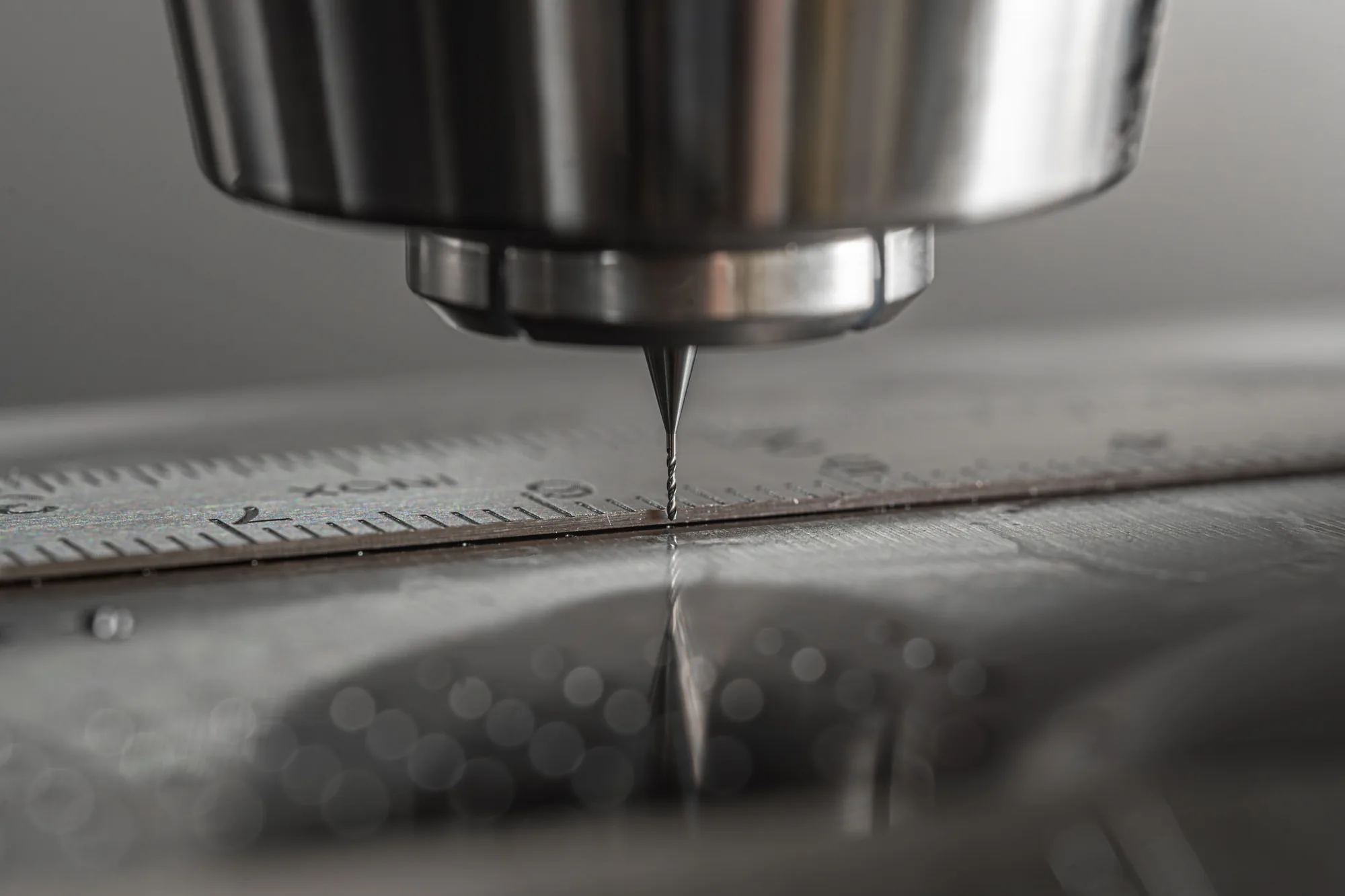
- Tolerance
- ±0.01 mm
- MOQ
- From 50 pcs
- Sample
- 5–10 days
- Production
- 25–35 days
- Documents
- MTR + pre-shipment photos
What this part is and where it is used
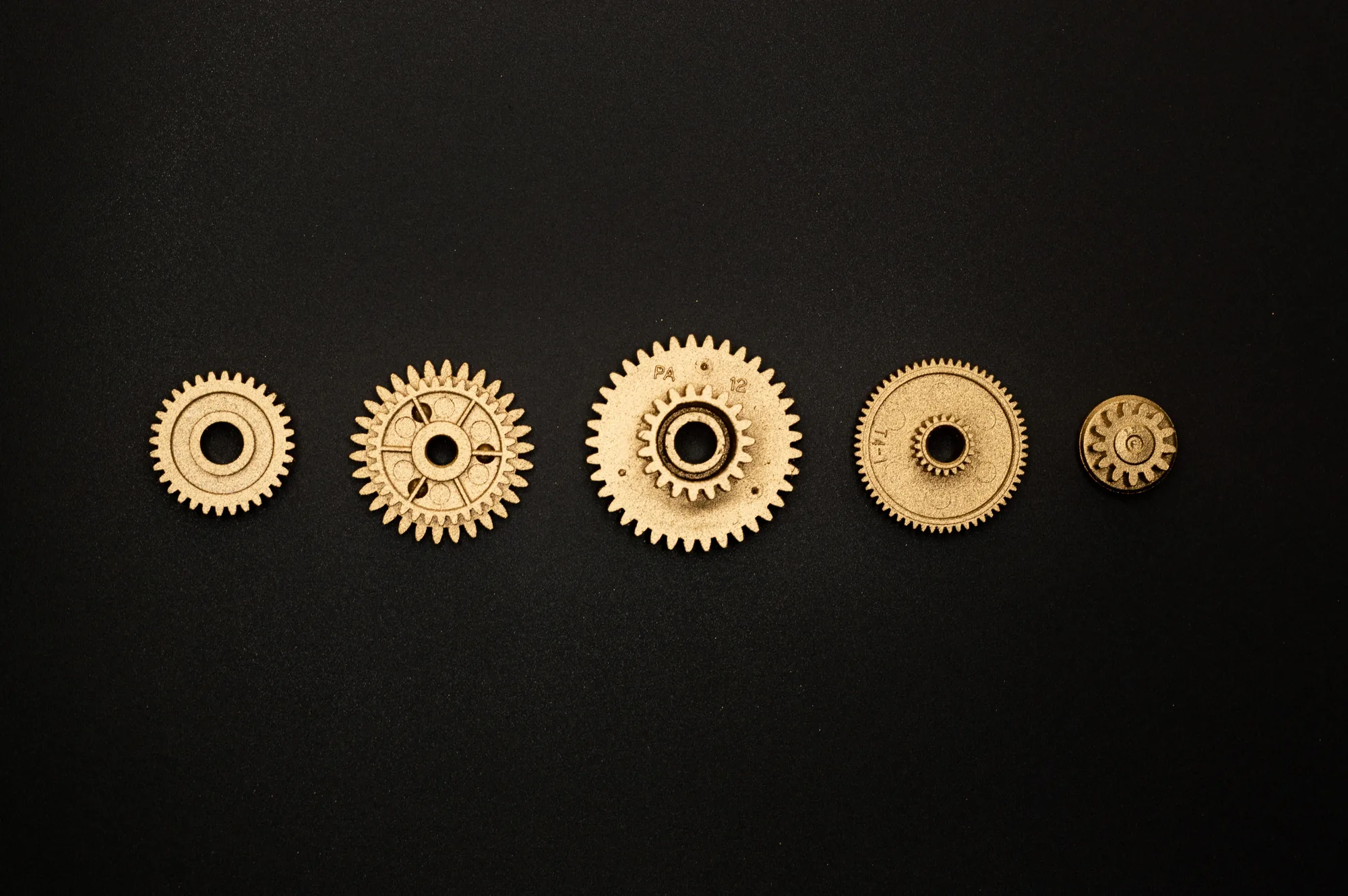
A gear is a rotating machine element with cut teeth that mesh with another toothed part to transmit torque, change speed or reverse direction. We machine custom gears and worm wheels from bar, plate and forged blanks to your drawing, covering spur, helical, bevel and worm tooth forms as well as rack and pinion pairs. Each gear is defined by its module or diametral pitch, tooth count, pressure angle, face width, and the bore, hub or keyway detail, so the drawing drives the cutting route rather than the reverse.
These parts go into gearboxes, reducers, actuators, pumps, conveyors, agricultural drives, packaging machines and general power-transmission assemblies. The buyer is usually an engineer specifying a replacement or prototype gear, or a procurement team sourcing a production batch. Because the tooth profile, bore and faces must stay in a controlled relationship, we plan every gear as one machining route — from blank preparation through tooth cutting to the final bore and face work — rather than treating the teeth as a separate afterthought.
Types and variants we manufacture
Spur gears are the workhorse for parallel shafts, with straight teeth cut by hobbing or shaping; they are the simplest to machine and the most common request. Helical gears use angled teeth for quieter, smoother running and come off the same hobbing route. Bevel gears transmit motion between intersecting shafts and are milled, while worm gears and worm wheels deliver high reduction in a compact stage and are cut to a specific lead and centre distance. Rack and pinion pairs convert rotation into linear travel and are cut as a matched set when the drawing requires it.
On the detail side, we machine plain bores, keyed bores, splined bores, hubs, shoulders, set-screw flats and threaded holes in the same programme. The cutting route is chosen by tooth size and volume: hobbing for production runs of external teeth, shaping for internal teeth and teeth close to a shoulder, and milling for prototypes, bevels and small batches. This lets us hold the same tooth geometry whether you order samples or a repeat production lot.
Materials, threads and finishes
Material choice follows the load and the environment. We cut gears from carbon steel 1045 and 1215, alloy steel 4140 for higher strength, stainless steel 303, 304, 316 and 17-4PH where corrosion or strength matters, and aluminium 2024, 6061 or 7075 for light instrument and prototype gears. Brass and bronze are common for worm wheels and low-load drives, and titanium is available where weight is critical. See our materials guide for the full working list and how each grade behaves under load.
Most gears ship in the machined condition or with a finish chosen for the application. Heat treatment, including carburising and induction hardening, and surface finishes such as anodising, zinc or nickel plating and black oxide are arranged through our vetted partner network, managed under one quality process. Whatever the finish, the gear leaves with the tooth form and bore specified on the drawing, plus a material certificate (MTR) so the material grade is documented.
Industries and applications
Gears and worm wheels appear across the machine-building sector. Our custom gears feed industrial equipment such as reducers, actuators, indexing tables, pumps, winches and conveyor drives, where tooth count and face width are set by the designer’s ratio and torque requirement. Agricultural and construction machinery use larger spur and bevel sets for drives and attachments, while food-processing and packaging equipment favour stainless steel gears for washdown areas.
Instrumentation, robotics and automation often specify small brass, aluminium or stainless gears for actuators and positioning stages. Marine and general engineering order worm gear pairs and racks for steering, lifting and feed mechanisms. Because every order is made to drawing, the same factory can serve a one-off replacement gear and a scheduled production lot — the difference is only quantity, not the machining route.
Why order this part from our factory
Everything happens under one roof in our factory in Qidong City, Jiangsu Province, China: blank preparation, tooth cutting, bore and keyway work, and finishing are planned as a single route, so the tooth profile and the mounting features are produced in the same job rather than handed between shops. We do not narrow the capability to one cutting method — hobbing, shaping and milling are chosen per part, and forging, heat treatment and plating are available in-house or through our vetted partner network.
You can compare this page against our turning and milling capability pages to see how gears sit alongside the shafts, screws and housings we already make. We hold ±0.01 mm on precision features and ISO 2768-m as the general tolerance, with an MOQ from 50 pieces and samples from 1 piece in 5–10 days. Production runs 25–35 days after sample approval, and we quote within 24 hours with DFM feedback. Every shipment goes out with a material certificate (MTR) and pre-shipment photos, and you can start through our request-a-quote form.
Specifications
| Gear types | Spur, helical, bevel and worm gears, worm wheels, rack and pinion |
|---|---|
| Tooth form | Module or diametral pitch per drawing |
| Cutting routes | Hobbing, shaping and milling |
| Bore | Plain, keyed or splined bore to drawing |
| Hub features | Hubs, shoulders, set-screw flats and threaded holes |
| Precision tolerance | ±0.01 mm on bore, hub and critical faces |
| General tolerance | ISO 2768-m unless stated on the drawing |
| Materials | Aluminium 2024/5052/6061/7075, stainless 301/303/304/304L/316/316L/410/416/17-4PH, carbon steel 1045/1215/12L14, alloy steel 4130/4140, tool steel D2/O1, brass, bronze, copper, titanium |
| Heat treatment | Carburising and induction hardening through our vetted partner network |
| Finishes | Anodising, zinc or nickel plating, black oxide through our vetted partner network |
| MOQ | From 50 pieces (samples from 1 piece) |
| Sample lead time | 5–10 days |
| Production lead time | 25–35 days after sample approval |
| Monthly capacity | Over 100,000 parts |
| Documents | Material certificate (MTR) + pre-shipment photos |
| Module | 0.5–6, up to 300 mm OD |
| Types | Spur, helical, worm, internal, rack |
| Tolerance | DIN 7 quality standard, DIN 6 on request |
| Secondary | Hobbing, grinding, case harden |
| Lot size | 10–5,000 pcs |
| Material | Aluminium 2024/5052/6061/7075, stainless 301/303/304/316/316L/17-4PH, brass, bronze, copper, titanium, alloy 4140 |
| Impeller types | Open, closed and semi-open impellers |
| Blade profiling | 5-axis and multi-axis machined blade surfaces |
| Hub and bore | Through, stepped, keyed and threaded hub bores |
| Shroud geometry | Integral front and back shrouds, trimmed to drawing |
| Balance features | Machined balance surfaces and correction grooves on hub and shroud |
| Max diameter | Within the 800 × 500 mm milling envelope |
| Surface finish | Bead blasting, anodizing, passivation and polishing through our vetted partner network |
| Quote | Within 24 hours with DFM feedback |
| Diameter | 20–400 mm |
| Blade count | 3–24, open or shrouded |
| Knob styles | Knurled, fluted, lobed, ball, star knobs and thumb nuts |
| Mounting | Press-fit, threaded (internal or external) and through-bore with set screw |
| Knurl patterns | Straight, diamond and cross-hatch |
| Threads | Metric and inch (UNC/UNF), internal or external per drawing |
| Process | Machined in-house; molded and die-cast through our vetted partner network |
| Samples | 5–10 days |
| Quote | Within 24 hours with DFM feedback |
| Capacity | Over 100,000 parts per month |
| Diameter | 8–80 mm |
Frequently asked questions
Can you make a single custom gear as a sample?
Yes. Samples start from 1 piece and ship in 5–10 days, so you can confirm tooth fit and mesh before committing to a production lot.
Do you cut gears to module or diametral pitch?
Both. Send the drawing with module or diametral pitch, tooth count, pressure angle and face width, and we quote from that data.
What gear types do you machine?
Spur, helical, bevel and worm gears, worm wheels, and rack and pinion pairs. Internal teeth and shoulder-adjacent teeth are cut by shaping where hobbing cannot reach.
Can you cut the bore, keyway and hub in the same job?
Yes. Bore, keyway, spline, hub and set-screw features are machined in the same programme as the teeth, keeping their relationship true.
What materials do you cut gears from?
Aluminium 2024/5052/6061/7075, stainless steel 301/303/304/304L/316/316L/410/416/17-4PH, carbon steel 1045/1215/12L14, alloy steel 4130/4140, tool steel D2/O1, brass, bronze, copper and titanium.
Can you supply heat-treated gears?
Yes. Carburising and induction hardening are available in-house or through our vetted partner network, managed under one quality process.
What tolerance can you hold on a gear?
±0.01 mm on precision features such as the bore, hub and critical faces, with ISO 2768-m as the general tolerance.
What is the MOQ for a production run?
From 50 pieces, with samples from 1 piece. Production runs 25–35 days after sample approval.
Do you ship a material certificate?
Yes. Every shipment includes a material certificate (MTR) and pre-shipment photos.
How fast is a quote?
Within 24 hours, with DFM feedback on tooth form, blank size and manufacturability.
Can you make a rack and pinion as a matched set?
Yes. We cut rack and pinion pairs as a matched set when the drawing calls for it.
Do you make worm wheels with the matching worm?
Yes. Worm and worm wheel pairs are cut to the specified lead, module and centre distance as a set.
Where is your factory?
Qidong City, Jiangsu Province, China. We machine, finish and ship from one location.
What is the difference between open, closed and semi-open impellers?
An open impeller leaves the blades exposed on the hub, a closed impeller has shrouds on both sides, and a semi-open impeller has one shroud. We machine all three to your drawing.
Can you machine the blade surfaces in 5-axis?
Yes. Curved and twisted blade profiles are cut on 5-axis and multi-axis machining routes so the blades come off the machine to profile.
What materials do you machine impellers from?
Aluminium 2024, 5052, 6061 and 7075; stainless steel 301, 303, 304, 316, 316L and 17-4PH; alloy steel 4140; brass, bronze, copper and titanium.
Do you machine from solid or from a casting or forging?
Both. We machine from solid billet or from a near-net casting or forging that we source through our vetted partner network.
What tolerance can you hold on the blade profile and bore?
±0.01 mm on precision features such as the bore and hub, with ISO 2768-m as the general tolerance.
Send your drawing — quote in 24 hours
DFM feedback, material certificates and pre-shipment photos come with every order.