metric fasteners
Metric Fasteners & Metric Machined Parts — DIN 912, 933, 934
Metric fasteners produced to spec, with the thread, grade and finish confirmed on the drawing before production.
Upload your drawing (STEP, IGES, DWG, DXF, PDF) — we return DFM feedback and a quote within 24 hours.
- Tolerance
- ±0.01 mm
- MOQ
- From 50 pcs
- Sample
- 5–10 days
- Production
- 25–35 days
- Materials
- Aluminium · stainless · steel · brass · titanium
Standard overview
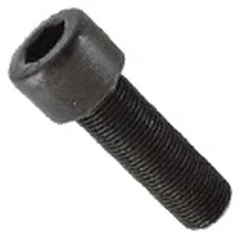
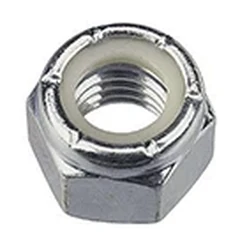
A metric fastener is identified by its nominal major diameter in millimetres followed by the thread pitch. A part called out as M10 × 1.5 is an external thread with a nominal major diameter of 10 mm and a pitch of 1.5 mm. When the pitch is omitted — M10 on its own — the coarse series is assumed, because every metric diameter has one designated coarse pitch and a choice of finer ones. The profile is a 60° V-thread defined by the ISO metric thread system, and common machined parts such as socket head cap screws, hexagon bolts and hexagon nuts are referenced to DIN 912, DIN 933 and DIN 934.
Buyers working to metric drawings usually face two practical questions at the start: which pitch to order, and which property class the part must carry. This page walks through both, along with how the hex size is chosen and how to put a metric thread on a drawing so there is nothing left to guess. The thread size and pitch tables rendered on this page are our working reference; they list the coarse and fine pitch for each diameter we machine, and the fraction-to-millimetre chart that helps when a legacy drawing mixes the two systems.
Sizes, threads and grades we cover
Coarse pitch is the default for most general assembly. The thread is deeper relative to its length, it taps and threads faster, and it tolerates a little surface damage or a slightly oversized pilot hole better than a fine thread. Choose coarse unless there is a reason not to. Fine pitch has a shallower helix angle and more engaged threads over the same length, so it resists loosening under vibration better, allows finer axial adjustment, and leaves more wall thickness when the thread is cut into a thin section. The trade-off is that a fine thread cross-threads more easily and is easier to damage during handling.
One point that surprises engineers is that the width across flats does not scale with the diameter. A hexagon is sized so a full range of fasteners can be driven with the same small set of wrenches, and so the head has enough bearing area and strength for the load. The result is a stepwise series — an M10 hexagon is 16 mm or 17 mm across flats depending on the standard, an M12 is 18 mm or 19 mm — rather than a continuous curve. If a socket, wrench or spanner size matters to your assembly, put it on the drawing.
Property class is the metric strength grade. For steel bolts the common classes are 8.8, 10.9 and 12.9; the first number is the minimum tensile strength in hundreds of megapascals and the second is the yield-to-tensile ratio. Stainless parts use the A2 and A4 designations of ISO 3506. The thread size and pitch table above lists the coarse and fine pitch for each diameter; the property class and any head marking should be called out separately.
Materials and finishes
Metric fasteners can be produced from the full range of materials we machine. Aluminium 2024, 5052, 6061 and 7075 suit low-weight, corrosion-sensitive assemblies; 7075 is the choice when strength matters, and 2024 when the part also has to hold a fine thread under load. Stainless steel 301, 303, 304, 316, 316L and 17-4PH cover most corrosive environments, with 303 easiest to machine, 316L best where chlorides are present, and 17-4PH the grade to specify when the fastener needs both corrosion resistance and high strength. Carbon steel 1045 and 1215 are economical for general hardware, and alloy steel 4140 is the material to specify when the part will be heat-treated to a high strength class. Brass, copper, bronze and titanium are available for conductive, decorative and high-strength-to-weight applications. The materials page lists the grades and the process each one runs on.
Finish follows the same pattern as every other secondary process on a machined part: plating, black oxide, anodising and heat treatment are all available, produced in-house or through our vetted partner network and managed under one quality process so the result is consistent from one batch to the next. Zinc plating is the most common protective finish for steel hardware; aluminium parts are typically anodised; stainless can be supplied bright or passivated. Tell us the finish by name and, where it matters, the coating thickness, and we will match it. See our custom bolts, custom nuts and custom screws pages for how these materials are machined into finished parts.
Ordering notes
Specifying a metric part on a drawing is easiest when the following appear together: nominal size and pitch (for example M8 × 1.25), the thread tolerance class (6g for external threads, 6H for internal), the property class or material grade, the head style and drive type, the length, the material, and the finish. Leaving any one of these off forces a guess, and the guess is where cost and lead time are usually lost. If you are replacing an off-the-shelf part, naming the DIN or ISO reference — DIN 912, DIN 933, DIN 934 — removes the remaining ambiguity.
Send the drawing through the request-a-quote form and you will get pricing within 24 hours with DFM feedback: we flag thread features that will be difficult to machine, suggest a different pitch or grade where it saves money, and confirm the material and finish before anything is cut. Orders start at 50 pieces, samples from a single piece, with samples in 5–10 days and production in 25–35 days after sample approval. A non-standard pitch or an unusual across-flats size is handled the same way as any other machined feature — see our drawing requirements and tolerances pages for what to put on the print.
Metric thread sizes, pitches and hex dimensions
| Nominal size | Coarse pitch (mm) | Fine pitch (mm) | s (across flats) (mm) | k (head height) (mm) |
|---|---|---|---|---|
| M1.6 | 0.35 | 0.2 | 3.2 | 1.2 |
| M2 | 0.4 | 0.25 | 4 | 1.5 |
| M2.5 | 0.45 | 0.35 | 5 | 1.8 |
| M3 | 0.5 | 0.35 | 5.5 | 2.1 |
| M4 | 0.7 | 0.5 | 7 | 2.9 |
| M5 | 0.8 | 0.5 | 8 | 3.5 |
| M6 | 1 | 0.75 | 10 | 4 |
| M8 | 1.25 | 1 | 13 | 5.3 |
| M10 | 1.5 | 1.25 | 16 | 6.4 |
| M12 | 1.75 | 1.25 | 18 | 7.5 |
| M16 | 2 | 1.5 | 24 | 10 |
| M20 | 2.5 | 1.5 | 30 | 12.5 |
| M24 | 3 | 2 | 36 | 15 |
| M30 | 3.5 | 2 | 46 | 18.7 |
| M36 | 4 | 3 | 55 | 22.5 |
| M42 | 4.5 | 3 | 65 | 26 |
| M48 | 5 | 3 | 75 | 30 |
| M56 | 5.5 | 4 | 85 | 35 |
| M64 | 6 | 4 | 95 | 40 |
Pitch per ISO 261. s = width across flats and k = head height for hex head bolts per ISO 4014. Fine pitches shown are the commonly used options; other pitches exist for special work.
Fraction, decimal inch and millimetre equivalents
| Fraction (in) | Decimal (in) | Millimetre (mm) |
|---|---|---|
| 1/16 | 0.0625 | 1.587 |
| 1/8 | 0.125 | 3.175 |
| 3/16 | 0.1875 | 4.762 |
| 1/4 | 0.25 | 6.350 |
| 5/16 | 0.3125 | 7.938 |
| 3/8 | 0.375 | 9.525 |
| 7/16 | 0.4375 | 11.112 |
| 1/2 | 0.5 | 12.700 |
| 9/16 | 0.5625 | 14.287 |
| 5/8 | 0.625 | 15.875 |
| 11/16 | 0.6875 | 17.462 |
| 3/4 | 0.75 | 19.050 |
| 13/16 | 0.8125 | 20.637 |
| 7/8 | 0.875 | 22.225 |
| 15/16 | 0.9375 | 23.813 |
| 1 | NaN | NaN |
| 1-1/8 | 1.125 | 28.575 |
| 1-1/4 | 1.25 | 31.750 |
| 1-3/8 | 1.375 | 34.925 |
| 1-1/2 | 1.5 | 38.100 |
Millimetre values are calculated from the exact fractional value (1 in = 25.4 mm) and rounded to three decimals.
Need a size or thread that is not listed? Send the drawingand we will confirm what we can hold.
Frequently asked questions
What does an M10 × 1.5 callout mean?
It names a metric external thread with a nominal major diameter of 10 mm and a pitch of 1.5 mm. If the pitch is omitted, the coarse series is assumed.
What is the difference between coarse and fine pitch?
Coarse pitch is the default series, with deeper threads that tap faster and tolerate handling damage better. Fine pitch puts more threads in the same length, which resists vibration loosening and allows finer adjustment but cross-threads more easily.
When should I choose a fine pitch thread?
Choose fine pitch for vibration-sensitive assemblies, fine axial adjustment, or when threading into a thin wall. Keep coarse pitch for general assembly where ease of handling matters more.
What property class should I specify for a metric bolt?
8.8 covers general structural and machine use, 10.9 is stronger, and 12.9 is for high-strength applications. Stainless parts are specified by the A2 or A4 designation.
What do the two numbers in 8.8 mean?
The first number is the minimum tensile strength in hundreds of megapascals (800 MPa), and the second is the yield-to-tensile ratio (0.8). Together they define the part's strength and how it behaves before it breaks.
Why is the width across flats not proportional to the diameter?
Hex sizes are standardised in steps so one wrench set drives the whole range, and so the head carries enough bearing area and strength. The result is a stepwise series rather than a linear ratio.
Can you machine custom metric sizes that are not in the standard tables?
Yes. Non-standard pitches, diameters and across-flats sizes are produced as machined features. Send the drawing and we will quote it with DFM feedback within 24 hours.
Which materials do you offer for metric fasteners?
Aluminium 2024/5052/6061/7075, stainless steel 301/303/304/316/316L/17-4PH, carbon steel 1045/1215, alloy steel 4140, brass, copper, bronze and titanium.
What is the minimum order quantity?
Production orders start at 50 pieces, and samples are available from a single piece.
How long do samples and production take?
Samples ship in 5–10 days. Production runs 25–35 days after the sample is approved.
Can you match a DIN 912, DIN 933 or DIN 934 part?
Yes. Naming the DIN reference on the drawing lets us match the head, thread and dimensional conventions directly.
What finishes are available?
Zinc plating, black oxide, anodising and passivation are the most common, with plating and heat treatment handled through our vetted partner network under one quality process.
Do you supply a material certificate?
Yes, we provide a material certificate (MTR) with the shipment, along with pre-shipment photos.
Send your drawing — quote in 24 hours
DFM feedback, material certificates and pre-shipment photos come with every order.